


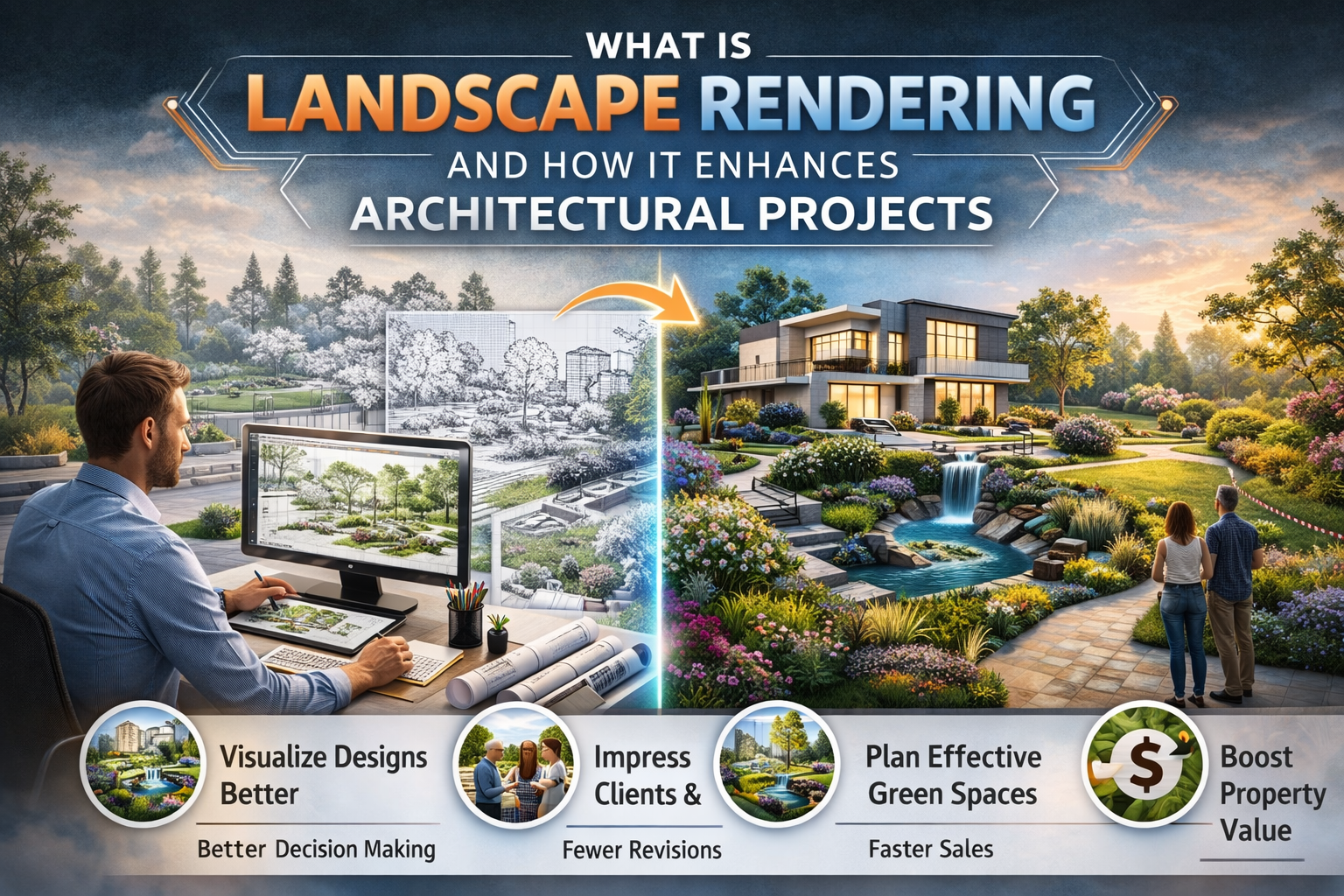
In modern architecture and real estate development, landscape rendering has become a crucial tool for architects, designers, and developers. As projects become more complex and clients demand highly visual presentations, the ability to showcase both the built environment and its surrounding landscape in realistic detail has transformed the design process. This article explores what landscape rendering is, its applications, and how it enhances architectural projects from planning to marketing.
What Is Landscape Rendering?
Landscape rendering is the process of creating highly realistic digital images or animations of outdoor spaces within architectural projects. Using advanced 3D software, designers can simulate landscapes, gardens, parks, streetscapes, and surrounding environments in a visually appealing and precise manner. Unlike traditional sketches or 2D drawings, landscape rendering provides a photorealistic view of the project’s environment, including vegetation, terrain, water features, lighting, and seasonal variations.These renderings can be static images, interactive 3D models, or immersive virtual walkthroughs, giving stakeholders a clear understanding of how the landscape integrates with the architecture.
Types of Landscape Rendering
Landscape rendering comes in several formats, each serving a unique purpose in architectural projects.
Exterior Landscape Rendering
Focuses on outdoor areas around buildings, including gardens, pathways, driveways, and recreational spaces. It helps architects plan aesthetics, functionality, and environmental impact.
Urban Landscape Rendering
Used for large-scale urban developments such as parks, streetscapes, and residential neighborhoods. It allows planners to visualize infrastructure, traffic flow, and public spaces.
Environmental Simulation
Simulates lighting, shadows, seasonal changes, and weather conditions to evaluate how the landscape will look under different scenarios. This is particularly useful for long-term planning and sustainable design.
Interactive 3D Walkthroughs
Offers clients and stakeholders the ability to navigate outdoor spaces virtually, exploring every detail of the landscape design in real time.
How Landscape Rendering Benefits Architects
For architects, landscape rendering offers multiple advantages, improving both design quality and project delivery.
Enhanced Design Visualization
Landscape rendering provides photorealistic visuals of the outdoor environment, allowing architects to see how their designs interact with natural and built elements. By visualizing sunlight, shadows, water reflections, and vegetation, architects can make informed design choices that improve aesthetics and functionality.
Improved Client Communication
Clients often struggle to interpret traditional 2D plans or sketches. Landscape rendering bridges this gap by offering clear, realistic images that clients can easily understand. This leads to faster approvals and stronger client confidence in the project.
Experimentation with Design Options
Architects can use landscape rendering to explore multiple design scenarios without the cost or effort of physical models. Different materials, plant types, terrain modifications, and water features can be tested virtually, ensuring the best possible outcome before construction begins.
Streamlined Project Planning
Rendering helps architects anticipate challenges such as drainage, sunlight exposure, and spatial constraints. This reduces errors during construction and ensures that the project remains aligned with both aesthetic and functional goals.
How Landscape Rendering Benefits Developers and Builders
Landscape rendering is not only valuable for architects; it is equally beneficial for developers and builders.
Accurate Project Planning
By visualizing the landscape, developers can plan infrastructure, utilities, and outdoor amenities more efficiently. Builders can understand exact terrain conditions, site elevations, and material requirements, reducing surprises during construction.
Cost and Time Efficiency
Identifying potential design or construction issues early through rendering can save significant costs. Developers can optimize landscaping materials, irrigation systems, and hardscape elements before construction begins, minimizing rework and delays.
Enhanced Marketing and Sales
High-quality landscape renderings are a powerful marketing tool. Developers can showcase the property’s exterior and surroundings to prospective buyers and investors, creating a strong emotional connection. Virtual tours, photorealistic images, and animations help convey the project’s lifestyle and environment effectively.
Better Collaboration
Landscape rendering facilitates collaboration between architects, builders, and landscape designers. Sharing 3D models and renderings ensures all stakeholders have a unified vision of the project, improving decision-making and coordination.
Additional Advantages of Landscape Rendering
Beyond direct project benefits, landscape rendering offers several additional advantages.
Sustainable Design Planning
Rendering allows architects and developers to evaluate environmental impact by simulating natural elements, sunlight patterns, and water flow. This helps in designing sustainable landscapes that maximize energy efficiency and minimize ecological disruption.
Realistic Seasonal Simulation
Landscape renderings can showcase how the property will look across different seasons. For instance, trees, flowers, and water features can be visualized in spring bloom, summer greenery, autumn colors, or winter dormancy. This provides a complete picture of the property throughout the year.
Competitive Advantage
In a crowded real estate market, visually striking presentations make a difference. Projects featuring detailed landscape renderings stand out to clients and investors, conveying professionalism, creativity, and attention to detail.
Versatility Across Platforms
Renderings can be used across multiple platforms, including.
-
Marketing brochures and websites
-
Social media campaigns
-
Virtual reality experiences
-
Investor presentations
This versatility ensures that the project gains maximum exposure and engagement.
Best Practices for Using Landscape Rendering
To fully leverage the potential of landscape rendering, architects and developers should consider the following.
Hire Experienced Rendering Professionals
High-quality renderings require expertise in software and design visualization. Companies like SMA Archviz provide professional landscape rendering services that combine accuracy, creativity, and client-focused design.
Integrate Design and Brand Identity
Incorporating branding and unique design elements ensures that renderings reflect the project’s vision and identity.
Update Renderings During Project Changes
Projects evolve over time, and renderings should be updated to maintain accuracy. Updated models help stakeholders stay aligned and avoid costly mistakes.
Use Renderings to Support Decision-Making
Utilize 3D landscape visuals not only for marketing but also for project planning, material selection, and sustainability evaluations.
Conclusion
Landscape rendering has revolutionized how architectural projects are visualized, planned, and marketed. By providing realistic, detailed, and interactive representations of outdoor spaces, it enables architects, designers, builders, and developers to make informed decisions, streamline workflows, and engage clients effectively. From enhancing design accuracy to improving marketing appeal, the benefits of landscape rendering are substantial.By partnering with professional 3D visualization experts like SMA Archviz, stakeholders can ensure their projects are not only visually stunning but also practical, sustainable, and market-ready. Embracing landscape rendering is no longer optional; it's a necessity for modern architectural success.

 Arabic
 French
 Spanish
 Portuguese
 Deutsch
 Turkish
 Dutch
Dutch
 Italiano
 Russian
 Romaian
 Portuguese (Brazil)
 Greek
Greek