


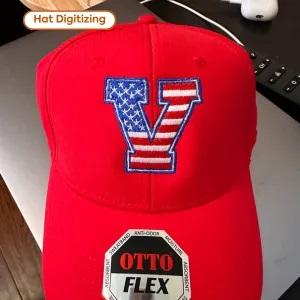
Hat digitizing in USA is a specialized embroidery service focused on converting logos and artwork into machine-ready files specifically engineered for caps and structured headwear. Because hats are stitched on curved, seam-centered surfaces, they require different technical settings than flat garments.
Businesses, apparel brands, sports teams, and promotional product companies rely on professional hat digitizing to ensure their logos stitch cleanly, remain properly aligned, and maintain durability through wear. When done correctly, cap embroidery delivers sharp lettering, balanced density, and consistent production results across single orders or bulk runs.
What Is Hat Digitizing?
Hat digitizing is the process of translating artwork, such as a company logo, text, or graphic, into a digital embroidery file that commercial embroidery machines can read. These files contain precise stitch instructions, including stitch types (satin, fill, run stitch), stitch direction, density, underlay configuration, pull compensation, thread color sequencing, and optimized pathing to reduce trims.
Unlike flat embroidery, cap digitizing must account for curvature, center seams, limited height, and structured materials. Without these technical adjustments, designs can distort or shift during stitching.
Why Cap Digitizing Requires Specialized Skill
Caps are typically embroidered using a cap frame that holds the hat while stitching moves from the center outward. This method reduces distortion but requires careful sequencing and compensation.
Common challenges include center seam interference, limited vertical embroidery space (usually 2–2.5 inches), curved stitching surfaces, thick structured panels, foam backing for 3D puff, and the risk of puckering on lightweight fabrics.
An experienced digitizer adjusts stitch angles, density, and underlay specifically for cap production. Designs originally created for flat garments often produce poor results on hats if not modified correctly.
Key Technical Elements of Quality Hat Digitizing
High-quality hat digitizing balances appearance with machine efficiency. A properly prepared file includes strong underlay stitching to stabilize the fabric before top stitches are applied. Density must be balanced to avoid stiffness while still providing solid coverage. Center-out sequencing helps prevent distortion, while accurate pull compensation accounts for fabric movement on curved panels.
Clean satin borders define logo edges clearly, and optimized thread pathing minimizes trims and unnecessary machine stops. These technical decisions reduce thread breaks and improve overall production performance.
Hat Styles That Require Cap-Specific Digitizing
Different hat constructions require different stitch strategies. Snapbacks, fitted caps, trucker hats, dad hats, beanies, visors, athletic performance caps, and both structured and unstructured caps all behave differently during embroidery.
Structured caps with firm front panels require stronger underlay and density adjustments. Softer caps need careful stabilization to prevent puckering. Digitizing must be customized for each hat type rather than using a one-size-fits-all approach.
3D Puff Hat Digitizing
3D puff embroidery is widely used for bold lettering and simplified logos on structured caps. This technique uses foam placed under satin stitches to create a raised effect.
Effective 3D puff digitizing requires wider satin stitches to cover the foam completely, carefully adjusted density to prevent foam exposure, clean edge finishing, correct stitch angles for shape definition, and solid underlay support. Highly detailed designs or very thin lines typically do not translate well into raised embroidery.
The Professional Hat Digitizing Process
A professional workflow usually begins with artwork evaluation to determine scalability and stitch feasibility. Vector cleanup or raster conversion follows, ensuring the design is production-ready. Stitch types and sequence are selected, and center-out layout planning is implemented for cap stability.
Density, underlay, and pull compensation are carefully adjusted before running a software simulation test. The file is then exported in the required embroidery machine format such as DST, PES, EXP, JEF, or VP3. Many providers recommend a physical sample stitch-out before bulk production to verify placement and stitch quality.
Common Errors in Hat Digitizing
Production issues often result from improper digitizing. Common mistakes include treating caps like flat garments, ignoring seam compensation, using excessive stitch density, creating poor pathing that causes visible trims, placing text too small for cap height limitations, and applying weak underlay that allows shifting.
These errors can increase material waste and slow production. Proper cap-specific digitizing reduces these risks significantly.
Benefits of Professional Hat Digitizing in USA
Working with an experienced U.S.-based digitizing service provides consistent file quality, faster turnaround times, and technical revision support. Files are optimized specifically for cap frames, reducing thread breaks and machine downtime.
Professional digitizers understand how commercial embroidery machines operate under production conditions, which improves efficiency across both small and large orders.
Industry Applications and Growing Demand
Hat embroidery remains popular across corporate branding, sports teams, fashion labels, construction companies, schools, event merchandise campaigns, and outdoor brands. Because caps are highly visible promotional items, precision in digitizing directly affects brand presentation.
With the growth of e-commerce apparel brands and small-batch customization, demand for professional hat digitizing continues to increase. Advances in digitizing software and embroidery equipment now allow for more complex designs while maintaining production speed.
FAQs About Hat Digitizing
1. What file format is used for hat embroidery?
Common formats include DST, PES, EXP, JEF, and VP3. The correct format depends on your embroidery machine brand.
2. Can any logo be digitized for a hat?
Most logos can be digitized, but very small text, thin lines, or overly detailed artwork may need simplification for clean cap embroidery.
3. How long does professional hat digitizing take?
Typical turnaround time is 12–24 hours depending on complexity. Rush services may be available for urgent orders.
4. Is hat digitizing different from standard embroidery digitizing?
Yes. Hat digitizing requires center-out sequencing, seam compensation, and adjustments for curved surfaces, which are not necessary for flat garments.
Conclusion
Hat digitizing in USA requires technical precision, software expertise, and real production knowledge. Because caps present structural challenges that flat garments do not, professional digitizing ensures embroidery remains clean, aligned, and ready for commercial stitching.
For businesses investing in branded headwear, accurate cap digitizing directly impacts embroidery quality, production efficiency, and long-term durability.

 Arabic
 French
 Spanish
 Portuguese
 Deutsch
 Turkish
 Dutch
Dutch
 Italiano
 Russian
 Romaian
 Portuguese (Brazil)
 Greek
Greek