


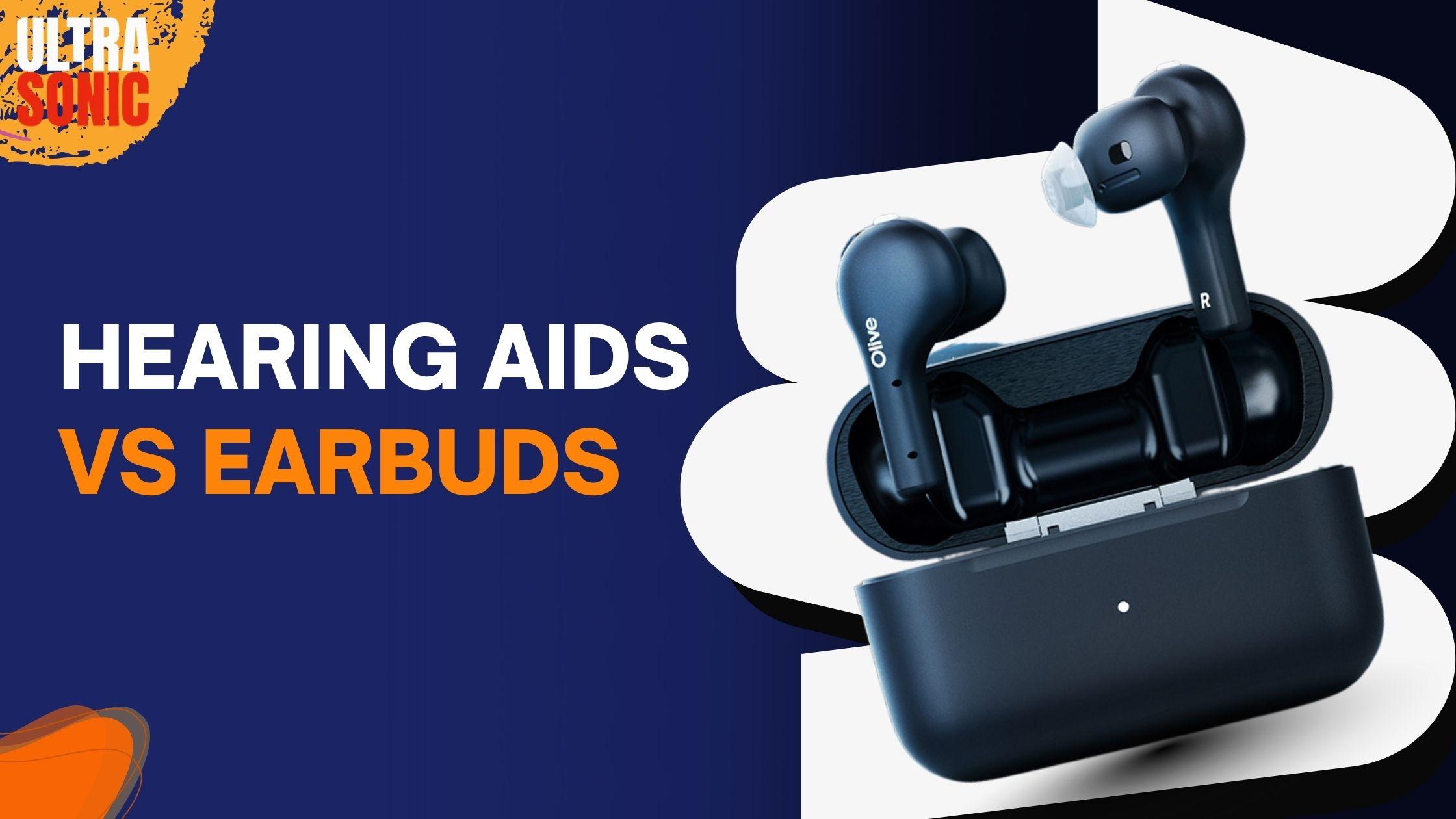
As personal audio technology continues to evolve, many people find themselves asking an important question: what’s the real difference between hearing aids and earbuds? With modern earbuds offering features like noise cancellation, Bluetooth connectivity, and sleek designs, the line between hearing support and everyday audio devices can seem blurry. However, when it comes to sound quality, comfort, and cost, there are still significant differences worth understanding.
At Ultra Sonic, we believe informed decisions lead to better hearing experiences. In this guide, we break down hearing aids vs earbuds to help you decide which solution best fits your lifestyle, listening needs, and budget.
Understanding the Core Purpose
The most important distinction between hearing aids and earbuds is their primary function.
Hearing aids are medical-grade devices designed to address hearing loss. They amplify sound selectively, enhancing speech clarity while reducing background noise. Advanced hearing aids are tuned to the user’s specific hearing profile and adapt to different environments such as quiet rooms, busy streets, or restaurants.
Earbuds, on the other hand, are consumer audio devices made for music, calls, and entertainment. While some earbuds offer “hearing enhancement” or transparency modes, they are not designed to treat hearing loss or provide personalized sound correction.
This difference in purpose plays a major role in how the two compare in sound quality, comfort, and cost.
Sound Quality: Precision vs General Audio
When comparing hearing aids vs earbuds, sound quality is often the deciding factor.
Hearing Aids
Hearing aids focus on speech clarity, not just loudness. They amplify specific frequencies based on the user’s hearing test results, making conversations easier to understand. Modern hearing aids also use directional microphones, feedback cancellation, and real-time sound processing to improve listening in challenging environments.
Devices like olive smartear combine advanced sound processing with smart technology, offering a more natural listening experience while supporting everyday audio needs.
Earbuds
Earbuds are optimized for music and media playback. Their sound profile emphasizes bass and overall richness rather than speech intelligibility. While transparency modes can let external sounds in, they do not adjust frequencies based on hearing loss patterns.
For people with normal hearing, earbuds deliver excellent entertainment value. But for those with hearing difficulties, earbuds often fall short in real-world conversations.
Verdict: Hearing aids deliver superior sound quality for speech and hearing support, while earbuds excel at entertainment.
Comfort and All-Day Wearability
Comfort is critical, especially for devices worn for extended periods.
Hearing Aids
Hearing aids are engineered for long-term daily use. They are lightweight, ergonomically designed, and shaped to fit securely in or behind the ear. Many users wear them for 10–16 hours a day without discomfort.
Modern designs, including discreet in-ear models and hybrid devices like olive smartear, prioritize both comfort and style, reducing the stigma traditionally associated with hearing aids.
Earbuds
Earbuds are comfortable for short to moderate use, but extended wear can cause ear fatigue or pressure. Most earbuds are designed for workouts, commuting, or phone calls—not all-day listening.
Additionally, earbuds are more likely to fall out during movement and may require frequent adjustments.
Verdict: Hearing aids are more comfortable for all-day use, while earbuds are better suited for short listening sessions.
Cost: Upfront Price vs Long-Term Value
Cost is often one of the most misunderstood aspects of hearing aids vs earbuds.
Hearing Aids
Traditional hearing aids can be expensive due to advanced technology, customization, and professional services. However, newer direct-to-consumer and smart hearing solutions have made hearing aids more accessible.
Products like olive smartear offer a balance between affordability and advanced functionality, giving users hearing support without the high price tag of conventional models.
Earbuds
Earbuds are generally more affordable upfront. Premium earbuds can still be costly, but they are usually less expensive than hearing aids.
However, earbuds are not a substitute for hearing correction. For users with hearing loss, relying on earbuds may lead to poor communication and increased listening fatigue, reducing their overall value.
Verdict: Earbuds cost less initially, but hearing aids offer better long-term value for those who need hearing support.
Lifestyle and Versatility
Modern users want devices that fit seamlessly into daily life.
Hearing aids today often include Bluetooth streaming, app-based controls, and rechargeable batteries. Hybrid solutions like olive smartear blur the line between hearing aids and earbuds, allowing users to switch between hearing support, music, and calls with ease.
Earbuds remain strong contenders for fitness, travel, and entertainment. However, they lack the adaptability and personalized sound correction that hearing aids provide.
Which Should You Choose?
The decision between hearing aids and earbuds depends on your hearing needs:
-
If you experience hearing loss or difficulty understanding speech, hearing aids are the clear choice.
-
If your hearing is normal and you want music, calls, and casual listening, earbuds are sufficient.
-
If you want a modern, discreet solution that combines both worlds, devices like olive smartear offer an innovative middle ground.
At Ultra Sonic, we encourage users to think beyond labels and focus on how a device supports their daily communication and quality of life.
Final Thoughts
The debate around hearing aids vs earbuds isn’t about which technology is better overall—it’s about which is better for you. Hearing aids deliver unmatched speech clarity, comfort, and hearing support, while earbuds shine in entertainment and convenience. With new hybrid solutions entering the market, users no longer have to choose strictly one or the other.
By understanding the differences in sound quality, comfort, and cost, you can make a confident decision that supports your hearing health today and into the future.
If you’re exploring smart hearing solutions, Ultra Sonic is here to help you find the right balance between technology, comfort, and performance.

 English
 Arabic
 French
 Spanish
 Portuguese
 Deutsch
 Turkish
 Dutch
Dutch
 Italiano
 Russian
 Portuguese (Brazil)
 Greek
Greek