


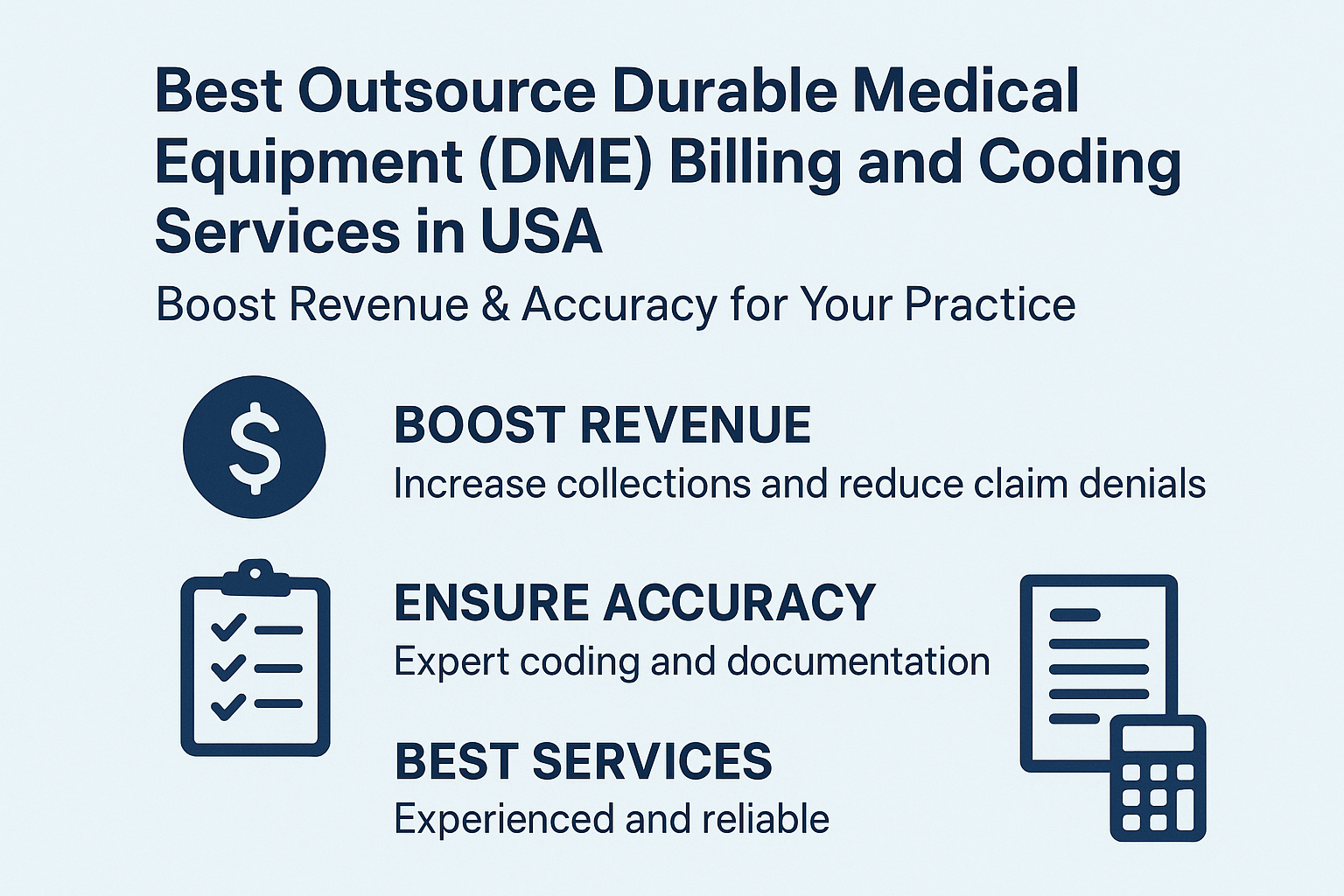
Durable Medical Equipment (DME) plays a critical role in patient care, but managing billing for DME can quickly become overwhelming. From understanding insurance requirements to avoiding common claim errors, healthcare providers in the USA often face hurdles that slow down reimbursement and affect cash flow. In this guide, we’ll break down everything you need to know about billing for DME, making it easier for clinics, hospitals, and DME suppliers to stay efficient and compliant.
Understanding DME Billing Basics
DME billing refers to the process of submitting claims for items like wheelchairs, oxygen equipment, walkers, and other medical devices prescribed to patients. Accurate billing is crucial because even small mistakes can lead to claim denials or delays in reimbursement.
Key points to remember:
-
Always verify patient eligibility and insurance coverage before submitting claims.
-
Maintain proper documentation of prescriptions, physician orders, and delivery confirmations.
-
Use accurate HCPCS codes to describe the equipment.
Why it matters: Errors in billing not only delay revenue but may also trigger audits from insurers or Medicare.
Common Challenges in DME Billing
Billing for DME can be complex due to several factors:
-
Varied insurance rules: Medicaid, Medicare, and private insurers have different policies.
-
Documentation requirements: Missing signatures or incomplete forms are frequent denial reasons.
-
Coding mistakes: Using the wrong HCPCS code or not updating for the latest coding changes can cause claim rejection.
-
Delivery confirmation: Some insurers require proof that the equipment was delivered and used properly.
Recognizing these challenges is the first step toward creating an efficient billing workflow that minimizes denials.
Steps to Streamline Your DME Billing Process
To ensure smoother reimbursements, follow these steps:
-
Eligibility Verification: Confirm coverage before equipment is dispensed.
-
Prescription Review: Double-check physician orders and ensure they meet insurance requirements.
-
Accurate Coding: Use up-to-date HCPCS codes and modifiers.
-
Proper Documentation: Maintain detailed patient records, delivery notes, and follow-up reports.
-
Claim Submission: Submit clean claims electronically for faster processing.
-
Denial Management: Track rejected claims and resubmit promptly with corrections.
Implementing these steps reduces errors, increases revenue, and improves patient satisfaction.
Best Practices for DME Providers in the USA
-
Train staff regularly on billing rules and insurance policies.
-
Keep updated on CMS guidelines and annual code changes.
-
Use billing software tailored for DME to automate repetitive tasks.
-
Regularly audit claims internally to catch errors early.
-
Maintain open communication with insurance companies for quicker resolutions.
Following best practices not only ensures compliance but also boosts overall efficiency in your operations.
How Outsourcing Can Help
Many DME providers in the USA struggle with time-consuming billing processes. Outsourcing to a professional billing service can help:
-
Reduce claim denials and increase reimbursement rates.
-
Ensure staff stays focused on patient care rather than administrative tasks.
-
Leverage expertise in coding, documentation, and insurance follow-ups.
Companies like 247 Medical Billing Services specialize in managing DME billing efficiently, ensuring faster turnaround and fewer claim errors.
Conclusion
Billing for DME is challenging but manageable with the right approach. By focusing on accurate documentation, proper coding, eligibility checks, and leveraging professional billing support, healthcare providers can improve revenue flow while maintaining patient satisfaction. Partnering with a trusted service like 247 Medical Billing Services ensures your DME billing in the USA stays accurate, compliant, and stress-free.
FAQs
Q1: What is considered DME?
A1: DME includes medical devices prescribed for home use such as wheelchairs, oxygen equipment, walkers, hospital beds, and CPAP machines.
Q2: Why do DME claims get denied?
A2: Common reasons include incorrect HCPCS codes, missing documentation, coverage issues, and delivery confirmation errors.
Q3: Can billing for DME be outsourced?
A3: Yes, outsourcing to professional billing companies like 247 Medical Billing Services helps reduce errors and streamline the claims process.
Q4: How can I reduce DME claim denials?
A4: Verify patient eligibility, maintain complete documentation, use accurate codes, and track claim submissions closely.
Q5: Is electronic claim submission better than paper claims?
A5: Yes, electronic submissions are faster, reduce errors, and allow for easier tracking and follow-ups.

 English
 Arabic
 French
 Spanish
 Portuguese
 Deutsch
 Dutch
Dutch
 Italiano
 Russian
 Romaian
 Portuguese (Brazil)
 Greek
Greek