


Introduction
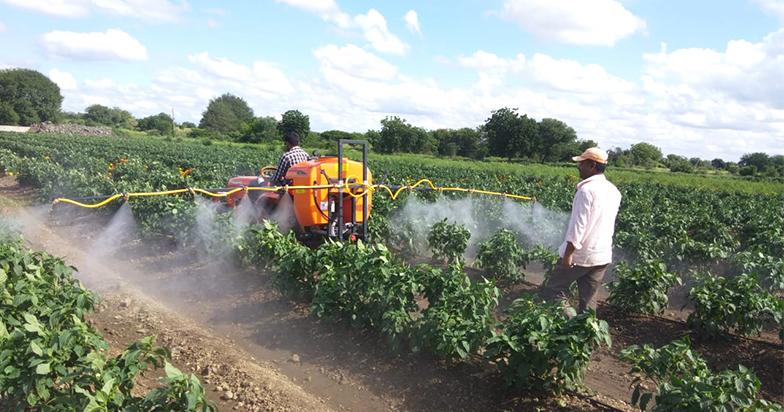
The agricultural sprayer equipment market is a vital segment of the global agricultural machinery industry, focused on systems used for the application of pesticides, herbicides, fertilizers, and micronutrients across crops. Sprayer equipment plays a critical role in improving crop yield, protecting against pests and diseases, and ensuring efficient nutrient management. These machines range from manual and knapsack sprayers to tractor-mounted, self-propelled, and drone-based spraying systems. With the growing need to enhance farm productivity amid rising global food demand and shrinking arable land, precision and efficiency in crop protection practices have become increasingly important. Rapid mechanization of agriculture, technological innovation in spraying systems, and the shift toward precision farming are significantly driving the adoption of advanced agricultural sprayer equipment across both developed and emerging economies.
Market Drivers
One of the primary drivers of the agricultural sprayer equipment market is the rising demand for higher crop productivity to meet the food requirements of a growing global population. Increasing incidence of pests, crop diseases, and weed infestations is driving continuous demand for efficient and uniform chemical application. Government initiatives promoting farm mechanization, particularly in developing regions, are significantly boosting the sales of sprayer equipment. Growth in large-scale commercial farming and contract farming is also strengthening demand for high-capacity tractor-mounted and self-propelled sprayers. Rising labor shortages and increasing agricultural wages are encouraging farmers to adopt mechanized spraying solutions that reduce manual dependency and improve operational efficiency. Advancements in precision agriculture, including GPS-guided spraying, variable rate application, and sensor-based spraying technologies, are further supporting market growth. In addition, the expanding use of liquid fertilizers and micronutrients is increasing the frequency of spraying operations, thereby strengthening long-term demand.
Market Challenges
Despite strong growth potential, the agricultural sprayer equipment market faces several challenges. High initial investment costs for advanced self-propelled sprayers and precision spraying systems can limit adoption among small and marginal farmers. Improper usage of sprayer equipment may lead to uneven chemical application, crop damage, and environmental contamination, increasing regulatory and operational risks. Maintenance requirements and spare part availability, especially in remote rural areas, can affect equipment uptime and farmer confidence. Fluctuations in agricultural commodity prices influence farmers’ purchasing power and capital expenditure on machinery. Stricter regulations on pesticide usage and chemical application limits may reduce spraying frequency in certain regions. The market also faces competition from low-cost, low-quality products that compromise safety and durability. In addition, lack of technical training and awareness regarding advanced spraying technologies can slow adoption in developing economies.
Market Opportunities
The agricultural sprayer equipment market offers strong growth opportunities through technological innovation, sustainable farming practices, and expansion in emerging agricultural economies. The rapid adoption of precision agriculture is creating demand for smart sprayers equipped with GPS, sensors, and automated control systems that optimize chemical usage and minimize wastage. The emergence of drone-based spraying systems is opening new opportunities, especially in difficult terrains and high-value crops where traditional equipment is inefficient. Growing focus on sustainable agriculture and reduction of chemical overuse is driving demand for targeted and variable-rate spraying technologies. Emerging markets in Asia-Pacific, Latin America, and Africa provide substantial growth potential due to rising farm mechanization, improving rural infrastructure, and increasing government support. The growing cultivation of horticulture, fruits, and vegetables, which require frequent and precise spraying, is also expanding the application base. The aftermarket segment, including nozzles, pumps, filters, and replacement parts, offers steady long-term revenue opportunities.
Regional Insights
Asia-Pacific dominates the agricultural sprayer equipment market due to its large agricultural base, growing population, and strong government focus on farm mechanization across China, India, Japan, and Southeast Asia. China leads the region with extensive use of tractor-mounted and self-propelled sprayers in large-scale farming operations. India is a high-growth market driven by increasing adoption of knapsack and power sprayers among small and medium farmers and expanding subsidies for farm equipment. North America represents a mature and high-value market supported by large farm sizes, advanced precision farming adoption, and strong demand for self-propelled and high-capacity sprayers in the United States and Canada. Europe holds a significant market share due to strict environmental regulations, high mechanization levels, and widespread use of precision spraying technologies in Germany, France, the United Kingdom, and Eastern Europe. Latin America shows strong growth driven by commercial farming in Brazil, Argentina, and Mexico. The Middle East & Africa region is gradually expanding with demand driven by irrigation-based farming, plantation crops, and food security initiatives.
Future Outlook
The future of the agricultural sprayer equipment market will be shaped by digital farming, sustainability requirements, and rapid technological evolution. Smart sprayers integrated with artificial intelligence, machine vision, and real-time crop sensing will enable highly targeted application, reducing chemical usage and operational costs. Drone-based spraying is expected to witness rapid growth due to its ability to cover large areas quickly with minimal soil compaction and labor dependency. Regulatory pressure to reduce environmental impact and chemical runoff will accelerate adoption of precision and low-drift spraying technologies. Electrification of spraying equipment and development of battery-powered sprayers will gain traction as energy efficiency and emission reduction become priorities. Data-driven farm management platforms will increasingly integrate spraying operations with weather data, soil health, and pest monitoring systems. As farmers shift toward sustainable, profitable, and technology-driven agriculture, the demand for advanced sprayer equipment is expected to grow steadily over the long term.
Conclusion
The agricultural sprayer equipment market plays a critical role in modern crop production by enabling efficient and controlled application of pesticides, herbicides, and fertilizers. Market growth is driven by rising food demand, increasing farm mechanization, labor shortages, and the rapid adoption of precision agriculture technologies. While challenges such as high equipment costs, regulatory constraints, and limited technical awareness persist, ongoing innovation in smart spraying systems and strong support from emerging agricultural economies are strengthening long-term market prospects. Asia-Pacific remains the dominant growth region due to extensive farming activity and government-led mechanization programs, while North America and Europe lead in advanced precision spraying solutions. As global agriculture moves toward higher efficiency and sustainability, agricultural sprayer equipment will remain an indispensable component of modern farming ecosystems.

 English
 Arabic
 French
 Spanish
 Portuguese
 Deutsch
 Turkish
 Dutch
Dutch
 Italiano
 Russian
 Romaian
 Portuguese (Brazil)