


Introduction
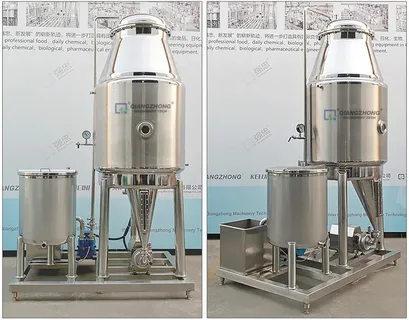
The deaeration machine market is a crucial segment of the global food processing, beverage manufacturing, pharmaceutical production, and industrial fluid treatment sectors. Deaeration machines are designed to remove dissolved gases—primarily oxygen and carbon dioxide—from liquids to prevent oxidation, improve product stability, enhance taste, and reduce microbial growth. These machines play a vital role in industries where product quality, shelf life, and process reliability are directly affected by dissolved gases. In food and beverage applications, deaerators are widely used in juice processing, dairy, brewing, carbonated drinks, and edible oil refining. In pharmaceuticals and industrial processes, they support the preparation of high-purity water and chemical solutions. As manufacturers prioritize product consistency, safety, and extended shelf life, demand for efficient deaeration technologies continues to rise. Technological advancements in vacuum systems, spray ball designs, and automated controls are further improving the efficiency and versatility of modern deaeration machines across industrial applications.
Market Drivers
A key driver of the deaeration machine market is the rising global demand for packaged and processed beverages. Oxygen negatively affects the flavor, color, and stability of juices, soft drinks, dairy beverages, and alcoholic drinks, making deaeration essential for maintaining product quality. The expansion of the food and beverage industry, driven by urbanization, changing lifestyles, and increasing consumption of ready-to-drink products, is boosting demand for advanced deaeration systems. In the pharmaceutical sector, stringent purity and sterility requirements for purified water and liquid formulations are supporting adoption of high-efficiency deaerators. The growth of the edible oil industry is contributing to increased installations, as oxygen removal helps prevent rancidity and improve storage stability. Industrial applications, including boiler feedwater treatment and chemical manufacturing, are also strengthening demand due to the need to minimize corrosion and equipment degradation. Additionally, manufacturers are increasingly adopting automated deaeration systems to reduce operational costs, enhance process reliability, and ensure regulatory compliance.
Market Challenges
Despite strong market demand, the deaeration machine market faces several challenges. High initial investment costs for advanced vacuum-based and spray-type deaerators can restrict adoption, especially for small and medium-sized food processing companies. Maintenance complexity involving pumps, vacuum systems, and heat exchangers adds to long-term operational costs. Variability in raw material properties, such as viscosity and temperature, can affect deaeration efficiency and require frequent process adjustments. Compliance with strict food safety, pharmaceutical purity, and industrial operational standards increases certification and validation costs. Supply chain disruptions for stainless steel components, sensors, and control electronics can impact production timelines. In some emerging markets, limited awareness of advanced deaeration technologies leads to continued reliance on traditional and less efficient methods. Additionally, fluctuations in beverage and industrial production cycles can influence equipment demand, creating short-term market uncertainty.
Market Opportunities
The deaeration machine market presents strong opportunities through emerging technologies, expanding application areas, and growth in developing economies. Increasing adoption of Industry 4.0 and smart manufacturing is creating demand for intelligent deaeration machines equipped with real-time monitoring, automated controls, and predictive maintenance capabilities. The rise of functional beverages, plant-based drinks, and cold-pressed juices is generating new demand for high-performance deaerators that can maintain product quality without compromising nutritional properties. Growth in global pharmaceutical production, especially in Asia-Pacific and Latin America, is opening significant opportunities for deaerators used in purified water and formulation processes. The expansion of renewable energy projects, including biofuel production, is creating new industrial applications for deaeration technologies. Modular and energy-efficient machine designs are gaining popularity among small-scale producers seeking cost-effective and scalable solutions. The aftermarket segment, including spare parts, upgrades, and service contracts, offers continuous revenue potential for manufacturers.
Regional Insights
Asia-Pacific dominates the deaeration machine market due to rapid growth in beverage processing, pharmaceutical manufacturing, and food production across China, India, Japan, and Southeast Asia. China leads the region with large-scale production of packaged beverages and strong investment in industrial fluid treatment. India is emerging rapidly due to expanding dairy processing, juice manufacturing, and pharmaceutical production. Europe represents a mature and technologically advanced market supported by strict food safety regulations, strong dairy and beverage industries, and a high emphasis on process automation. Germany, Italy, France, and the Netherlands are major contributors. North America holds a significant market share driven by large beverage production capacity, advanced pharmaceutical manufacturing, and consistent adoption of high-efficiency deaeration systems in the United States and Canada. Latin America shows strong growth potential supported by expanding food and beverage industries in Brazil, Mexico, and Chile. The Middle East & Africa region is gradually expanding due to rising beverage consumption, industrial development, and increasing investment in food processing infrastructure.
Future Outlook
The future of the deaeration machine market will be shaped by ongoing technological innovation, sustainability goals, and rising global demand for high-quality processed liquids. Manufacturers will increasingly focus on developing energy-efficient vacuum systems, low-maintenance components, and compact modular designs suitable for diverse production environments. Integration of artificial intelligence and digital monitoring will enable real-time process optimization, fault prediction, and predictive maintenance. Growth in premium beverage categories, such as cold brew coffee, plant-based drinks, and functional beverages, will require more precise and gentle deaeration methods to preserve natural flavors and nutrients. The pharmaceutical and industrial sectors will continue to demand high-purity deaerators to support complex fluid preparation processes. As environmental regulations tighten and energy conservation becomes a priority, future deaeration machines will incorporate improved heat recovery, reduced power consumption, and eco-friendly construction materials. Overall, the market is expected to maintain steady growth driven by evolving consumer preferences, technological upgrades, and global industrial expansion.
Conclusion
The deaeration machine market plays an essential role in enhancing product quality, extending shelf life, and improving process reliability across food, beverage, pharmaceutical, and industrial applications. Market growth is being driven by rising demand for processed beverages, the need for high-purity industrial fluids, and expanding pharmaceutical manufacturing. Although challenges such as high capital investment, maintenance complexity, and strict compliance requirements persist, continuous technological advancements and strong demand from emerging markets are strengthening long-term growth prospects. Asia-Pacific remains the dominant growth region, while Europe and North America continue to lead in advanced technology adoption. As global industries increasingly prioritize efficiency, safety, and environmental sustainability, deaeration machines will remain a critical component of modern fluid processing systems.

 English
 Arabic
 French
 Spanish
 Portuguese
 Deutsch
 Turkish
 Dutch
Dutch
 Russian
 Romaian
 Portuguese (Brazil)
 Greek
Greek