


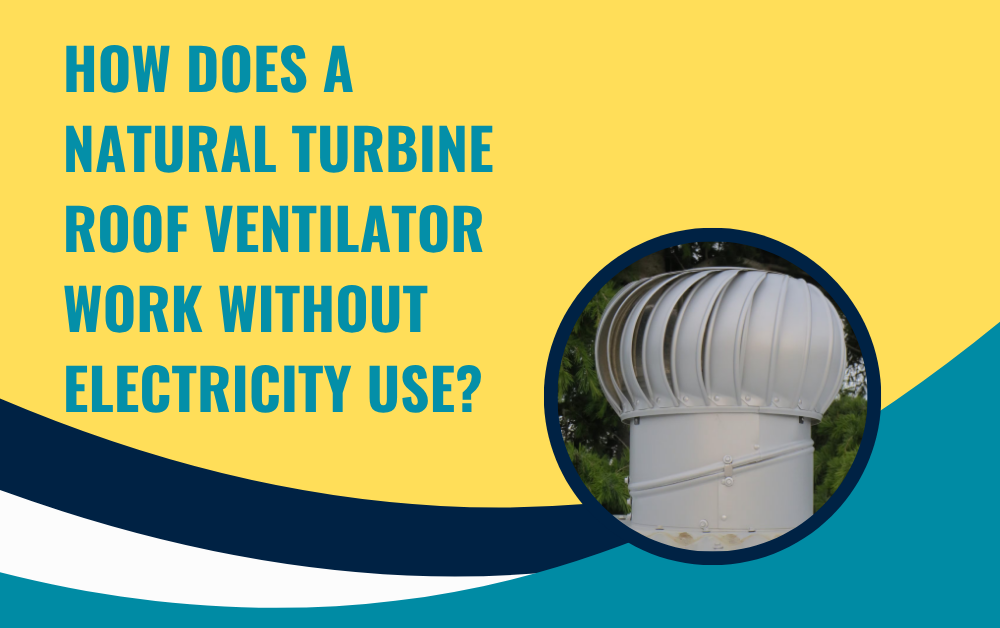
For many years, natural ventilation has been regarded as the most effective and economical method of providing indoor air quality, reducing the concentration of pollutants, controlling internal temperature within structures, and creating a pleasant environment in both household and industrial settings. The natural turbine roof ventilator is one of the most popular and effective devices for this kind of application, and it functions without any electricity. Its operation is based on the principles of wind energy, convection, and aerodynamics, allowing for constant circulation.
This post will examine the natural turbine roof ventilator in more detail, exploring how it operates, why it doesn’t require electricity, and how it serves as an eco-friendly option for today’s buildings.
Understanding Natural Turbine Roof Ventilators
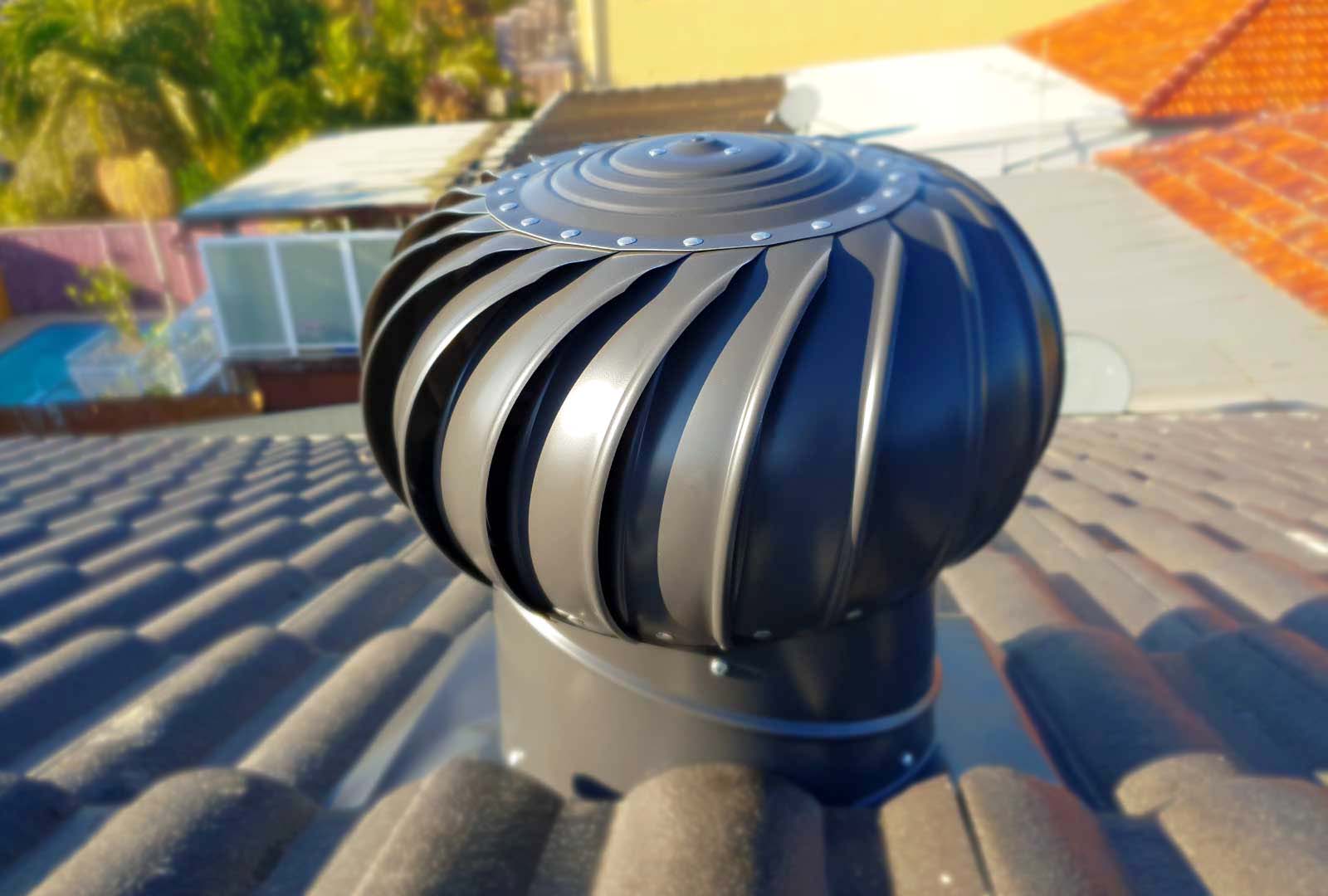
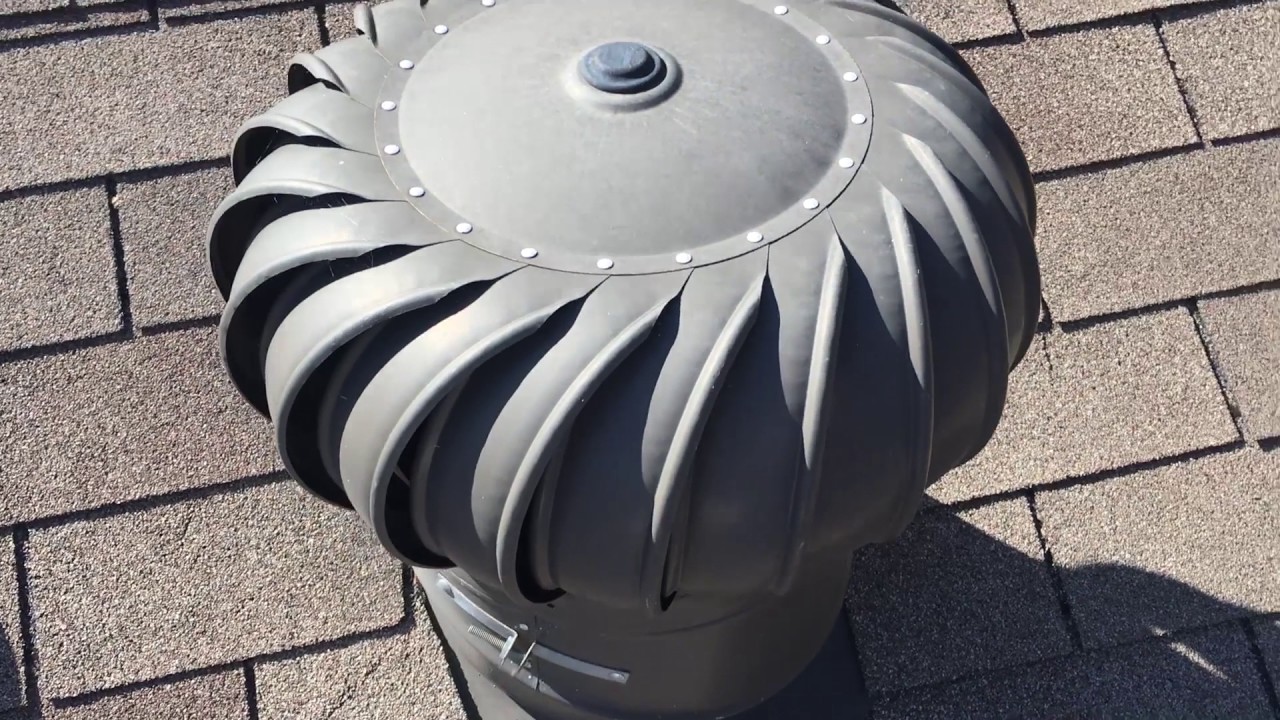
A wind-driven roof ventilation terminus, also known as a whirlybird, is typically a circular dome mounted on the roof of the building. It is characterized by its unique design, featuring curved vanes or blades inserted in a ring shape, which resembles a revolving turbine. The primary function of this fan is to remove the hot, stale, or contaminated air from inside a building constantly, and it pushes a fresh supply from the outside.
Natural turbine roof ventilators. Natural air is the motive power, and natural forces of wind pressure and the stack effect are drivers of rotation rather than electricity or mechanical motors. The latter makes it an excellent economic as well as green option.
The Science Behind Natural Ventilation
To understand how turbine ventilators work without electricity, you need to understand the fundamentals of natural ventilation:
Wind Pressure
Operable roof vents, Whenever air moves across the roof, pressures on either side of it create a pressure difference through the building. As the wind blows, the turbine's curved blades capture the wind force and rotate, spinning the vent. Instead of being pulled down the discharge grate, warm or stale indoor air is sucked outward.
Convection or Stack Effect
Hot air rises simply because it is less dense than cold air. This heated air collects in confined spaces, such as warehouses, factories, or houses, under the roof. Turbine Ventilator - The turbine ventilator creates a means for this air to release through the spinning dome. Cooler air is “sucked” into the room from lower-level openings (windows, doors, vents).
Between the wind and convection, a continuous, energy-free venting system is provided.
NOTE:- Workplace comfort was enhanced when a Natural Turbine Roof Ventilator was installed, providing sustainable ventilation without electricity use. Its efficiency in reducing heat build-up was highly appreciated. For premium-quality ventilators and expert service, Presto Electromechanics Company LLC was relied upon. Contact them today to secure efficient and long-lasting ventilation systems.
Components of a Turbine Roof Ventilator
A turbine roof ventilator is a type of device characterized by its simple construction. However, every part carries an important function for it to work without electricity:
- Dome and Blades: The spinning section of the ventilator, either made from aluminum or stainless steel, catches wind. Its sleek profile allows for maximum rotation even in low wind conditions.
- Bearing system: Premium bearing assembly for smooth rotation and minimal wear. Being a naturally force-dependent system, the device's performance relies on efficient bearings.
- Base Plate or mounting frame: it is the part that locks the ventilator to the roof and offers support during rotation.
- Neck or Throat: A cylindrical portion through which air flows directly after leaving the building.
And they are so simple that they lack any electrical wiring, tunable motors, or external power sources — and barely require maintenance.
Step-by-Step Working Mechanism
The function of a natural turbine roof ventilator is as follows:
1. Wind Interaction
When a breeze crosses the roof, it smacks against the blades of the ventilator. The aerodynamically shaped wings make it well-suited even for an unsteady wind room.
2. Suction Effect
As for the ventilator, when it goes round, it forms a suction or low-pressure area in the throat. This sucking extracts the hot air that remains below the roof and is standing idle.
3. Heat-Induced Airflow
With no wind at all, the ventilator can still work through convection. Warm air ascending from beneath flows out of the ventilation shaft, which is turned by the rising draught.
4. Continuous Cycle
When hot air is expelled, cooler air naturally flows in through openings such as doors and windows. So you have a constant rotation of air with no outside effort.
Why No Electricity Is Required
A notable benefit of natural turbine roof ventilators is that the units are not reliant on electricity at all. Here’s why:
- Wind Energy Harnessing: Wind becomes a source of kinetic energy, which is necessary for the rotation.
- Using Heat: Rising air has a natural inclination to do so, thanks to the buoyancy provided by warm air.
- Autonomous Mode of Operation: After installation, the ventilator operates independently and requires no external energy.
Due to this attention, they are being seen as an eco-friendly and affordable ventilator.
Applications of Natural Turbine Roof Ventilators
Turbine roof ventilators can be applied in a number of settings for the following reasons:
Industrial Use
Factories, warehouses, and workshops generate heat and fumes. Turbine Ventilators are a cost-effective way to ensure air movement and disperse pollutants.
Residential Buildings
Within homes, they help regulate attic temperatures, limit moisture buildup, and reduce stress on cooling systems.
Commercial Establishments
Malls, auditoriums, and schools also have better indoor air quality due to natural ventilation.
Advantages of Natural Turbine Roof Ventilators
The popularity of turbine roof ventilators is on the rise: Factory vents offer many benefits:
Cost-Effective Operation
Not only are the running costs almost free because they don’t use electricity. “One of the benefits, really, is the ability not to touch anything after this initial investment, which pays off over time,” he added.
Environmentally Friendly
By mitigating the need for powered ventilation systems, they also help save energy and reduce carbon emissions.
Low Maintenance
They do not contain engines or other electrical elements, so maintenance is low. Top-notch bearings and weather-resistant materials guarantee a long service life.
All-Weather Functionality
Due to convection currents, these ventilators function equally well with or without a breeze.
Enhanced Indoor Comfort
They reduce heat gain in the summer, decrease dampness during monsoons, and improve air quality throughout the year.
Factors That Influence Performance
While wind-driven turbine roof ventilators are extremely efficient, that efficiency is a function of several factors:
- Roof Design: Generally, sloping roofs offer better ventilation than flat roofing systems.
- Size: Bigger ventilators can take more air.
- Installation Height: The higher you install it, the better the convection.
- Wind Velocity: Higher wind velocity means better rotations and suction of the turbine.
They serve their purpose most efficiently when they are well planned and installed by a professional.
Common Misconceptions
While they are effective, there are also some myths surrounding turbine roof ventilators:
- They Don’t Work With No Wind: Actually, they still work in balmy weather because hot air rises.
- They Keep Rain Out -Welded flashing, cut counter flashing, and overlapping blades block water.
- They Damage The Roof’s Structure – they don’t weaken the roof when installed correctly.
Decoding these myths is necessary for informed decisions.
Comparing Natural Turbine Ventilators to Powered Ventilation
It will be informative to compare natural turbine ventilators with mechanical systems to underline their differences.
- Energy Use: Mechanical ventilators run on electricity, whereas natural ventilators do not.
- Maintenance: Servicing and rewiring of motors are needed for electric ventilators. Natural ventilators require minimal upkeep.
- Cost of Installation: Power systems are more expensive to set up due to the high costs associated with wiring and motors. Systems in the wild are generally less expensive to implement.
- Greenness: Natural Ventilators will stand up to the test of time as a solution for your green plans.
Conclusion
These natural turbine roof ventilators are a good illustration of how basic engineering concepts can make use of natural forces to provide for human needs. Wind Energy+convective, infinite all-day airflow, even without electricity. Aimed at performance, thanks to an aerodynamic blade and an efficient bearing system that works perfectly in both windy and barely windy conditions.
These ventilators are suitable for homeowners, industries, and commercial spaces, offering effectiveness, a natural approach, and ease of maintenance to improve indoor air quality and thermal comfort. Now, when using natural turbine roof ventilators has become an important aspect of sustainability and energy efficiency, they are a sensible alternative for any ventilation requirements!

 English
 Arabic
 French
 Spanish
 Portuguese
 Deutsch
 Turkish
 Italiano
 Russian
 Romaian
 Portuguese (Brazil)
 Greek
Greek