


Introduction
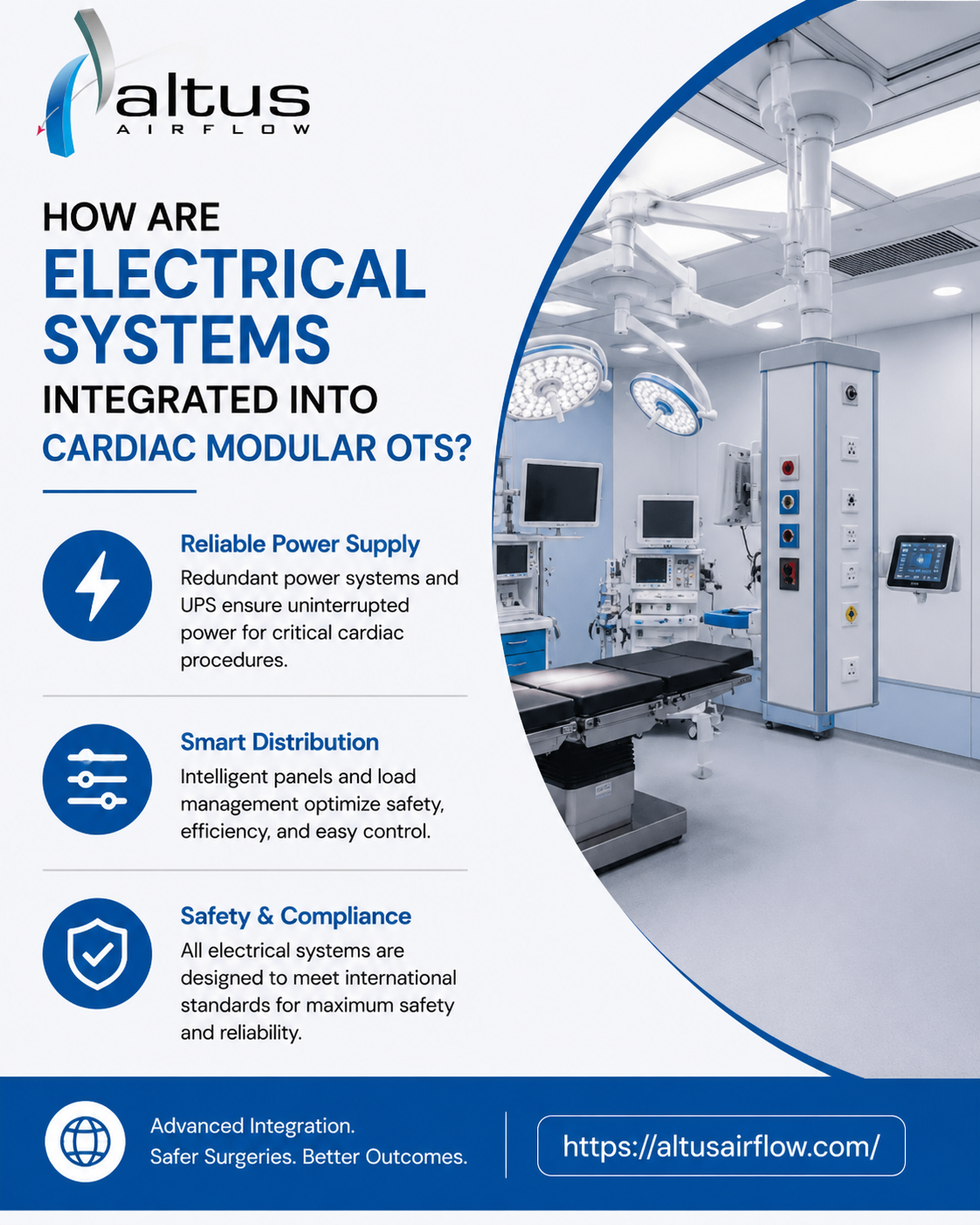
Modern healthcare facilities rely on advanced infrastructure to support complex surgical procedures, especially in cardiac care. A Cardiac Modular Operation Theatre is a highly specialized surgical environment where precision, safety, reliability, and uninterrupted performance are essential. These operation theatres are designed with integrated engineering systems that ensure smooth functioning of surgical equipment, environmental controls, communication systems, and life-support technologies. Among all these components, electrical systems form the backbone of the operation theatre and play a critical role in maintaining safe and efficient surgical operations.
Cardiac surgeries often involve sophisticated medical devices such as heart-lung machines, anesthesia workstations, patient monitoring systems, surgical lights, imaging equipment, and communication networks. All these systems depend on a stable and reliable electrical infrastructure. Even a brief interruption in power supply can have serious consequences during a cardiac procedure. Therefore, electrical integration in modular cardiac OTs is carefully planned to provide continuous power, safety, redundancy, and operational efficiency.
Understanding Electrical Integration in Cardiac OTs
Electrical integration refers to the systematic planning, installation, and coordination of all electrical systems within the operation theatre.
The goal is to ensure:
- Continuous power availability
- Safe equipment operation
- Reliable communication
- Efficient environmental control
A well-designed Cardiac Modular Operation Theatre depends on robust electrical infrastructure.
Importance of Electrical Systems in Cardiac Surgery
Cardiac surgeries involve life-saving procedures where every second matters.
Electrical systems support:
- Surgical equipment
- Monitoring systems
- Ventilators
- Lighting systems
- Communication networks
Reliable electrical performance is essential for patient safety.
Main Components of Electrical Integration
Several interconnected systems form the electrical backbone of a cardiac OT:
- Power distribution systems
- UPS systems
- Backup generators
- Lighting systems
- Grounding networks
- Medical equipment interfaces
- Automation controls
- Communication systems
These components work together to maintain operational continuity.
Power Distribution Systems
Power distribution is the foundation of electrical integration.
The system includes:
- Main distribution boards
- Sub-distribution panels
- Dedicated circuits
- Power outlets
Power is distributed efficiently to all equipment and systems.
Segregation of Critical and Non-Critical Loads
Electrical loads are categorized based on importance.
Critical loads include:
- Ventilators
- Monitors
- Anesthesia machines
- Surgical equipment
Non-critical loads are managed separately to prioritize essential systems.
Dedicated Power Circuits
Critical medical equipment receives power through dedicated circuits.
Benefits include:
- Improved reliability
- Reduced interference
- Enhanced safety
Dedicated circuits help prevent overloads.
Uninterruptible Power Supply (UPS) Integration
UPS systems are essential in cardiac operation theatres.
They provide:
- Instant backup power
- Voltage stabilization
- Protection against power fluctuations
UPS systems maintain operations until generators activate.
Emergency Generator Systems
Backup generators ensure uninterrupted power during extended outages.
Generator systems include:
- Automatic start mechanisms
- Fuel storage
- Load transfer systems
Reliable backup power is crucial in cardiac procedures.
Automatic Transfer Switches (ATS)
ATS units automatically switch power sources when utility power fails.
Benefits include:
- Seamless transitions
- Reduced downtime
- Improved safety
Automation minimizes operational disruptions.
Surgical Lighting Integration
Lighting is a critical component of operation theatre design.
Electrical systems support:
- Surgical lights
- Examination lights
- Ambient lighting
Reliable lighting improves visibility and precision.
LED Lighting Technology
Modern cardiac OTs increasingly use LED lighting systems.
Advantages include:
- Energy efficiency
- Long lifespan
- Consistent illumination
LED technology enhances performance while reducing maintenance.
Grounding and Earthing Systems
Electrical safety depends heavily on proper grounding.
Grounding systems:
- Prevent electrical shocks
- Protect equipment
- Improve system stability
Safe grounding protects patients and healthcare staff.
Equipotential Bonding Networks
Equipotential bonding equalizes electrical potential throughout the OT.
Benefits include:
- Reduced shock risk
- Enhanced safety
- Improved compliance
Bonding systems are critical in healthcare environments.
Isolation Power Systems
Many cardiac OTs use isolated power systems.
These systems:
- Reduce leakage currents
- Improve safety
- Minimize electrical hazards
Isolation enhances protection for sensitive medical equipment.
Surge Protection Systems
Electrical surges can damage critical devices.
Surge protection devices help:
- Prevent equipment damage
- Improve reliability
- Extend equipment lifespan
Protection systems are installed throughout the electrical network.
Medical Equipment Integration
Modern operation theatres contain numerous medical devices.
Electrical integration supports:
- Heart-lung machines
- Monitoring equipment
- Infusion pumps
- Imaging systems
Reliable connectivity ensures smooth operation.
HVAC System Integration
HVAC systems rely on electrical infrastructure for operation.
Electrical systems support:
- Air handling units
- Filtration systems
- Environmental controls
HVAC performance directly impacts infection control.
Environmental Monitoring Systems
Cardiac OTs require continuous monitoring of environmental conditions.
Systems track:
- Temperature
- Humidity
- Air pressure
Electrical integration ensures accurate monitoring and control.
Building Automation Systems
Automation systems help manage OT operations.
Functions include:
- Lighting control
- HVAC management
- Energy monitoring
Automation improves efficiency and reliability.
Nurse Call Systems
Communication systems are integrated into the electrical infrastructure.
Nurse call systems provide:
- Emergency communication
- Staff coordination
- Rapid response capabilities
Efficient communication improves workflow.
Audio-Visual Integration
Modern cardiac OTs often include advanced AV technologies.
Applications include:
- Surgical recording
- Video conferencing
- Training sessions
Reliable electrical support enables seamless functionality.
Data Network Infrastructure
Digital healthcare technologies require stable network connectivity.
Integrated systems support:
- Electronic medical records
- Medical devices
- Monitoring systems
Data infrastructure improves operational efficiency.
Security and Access Control Systems
Controlled access enhances OT security.
Electrical integration supports:
- Access cards
- Biometric systems
- Surveillance equipment
Security systems protect critical healthcare areas.
Fire Detection and Alarm Systems
Fire safety systems are integrated into the electrical network.
These systems include:
- Smoke detectors
- Alarm panels
- Emergency notifications
Early detection improves facility safety.
Emergency Lighting Systems
Emergency lighting activates during power failures.
Benefits include:
- Safe evacuation
- Continued visibility
- Regulatory compliance
Emergency systems improve preparedness.
Energy Management Systems
Hospitals increasingly focus on energy efficiency.
Electrical management systems help:
- Monitor consumption
- Reduce waste
- Optimize performance
Efficient operations lower costs.
Redundancy in Electrical Design
Redundancy ensures continuous operation even if one component fails.
Examples include:
- Dual power feeds
- Backup UPS units
- Multiple distribution pathways
Redundant systems improve reliability.
Compliance with Healthcare Standards
Electrical systems must comply with healthcare regulations.
Standards address:
- Safety requirements
- Equipment performance
- Installation procedures
Compliance supports patient safety and accreditation.
Testing and Commissioning
Before operation, electrical systems undergo rigorous testing.
Processes include:
- Load testing
- Safety verification
- Functional validation
Testing ensures system readiness.
Preventive Maintenance Requirements
Electrical systems require regular maintenance.
Maintenance activities include:
- Panel inspections
- Battery testing
- Circuit verification
Routine maintenance reduces operational risks.
Benefits of Proper Electrical Integration
A well-integrated electrical system provides:
- Enhanced patient safety
- Reliable equipment operation
- Reduced downtime
- Improved workflow
These benefits support successful cardiac surgeries.
Future Trends in Electrical Integration
Technological advancements continue to improve operation theatre infrastructure.
Emerging innovations include:
- Smart power management
- AI-based monitoring
- Predictive maintenance systems
Future technologies will further improve reliability and efficiency.
Why Electrical Planning Matters
Electrical infrastructure is not simply a utility system; it is a critical part of surgical operations.
Proper planning helps:
- Prevent failures
- Improve safety
- Support advanced technologies
Reliable electrical systems contribute directly to better patient outcomes.
Conclusion
Electrical systems are one of the most important elements of a Cardiac Modular Operation Theatre, providing the power, safety, reliability, and connectivity required for modern cardiac surgeries. From power distribution networks and UPS systems to lighting controls, grounding systems, HVAC integration, communication infrastructure, and backup power solutions, every electrical component plays a vital role in maintaining uninterrupted surgical operations. Proper integration ensures that healthcare professionals can perform complex procedures in a safe and efficient environment.
Altus Airflow specializes in delivering advanced operation theatre solutions that incorporate reliable electrical engineering, modern healthcare technologies, and world-class infrastructure standards. By partnering with experienced providers like Altus Airflow, hospitals can develop future-ready cardiac operation theatres that support superior patient care, operational efficiency, and long-term reliability.
FAQs
1. How are electrical systems integrated into a Cardiac Modular Operation Theatre?
A Cardiac Modular Operation Theatre integrates power distribution systems, UPS units, backup generators, surgical lighting, grounding networks, HVAC controls, automation systems, communication infrastructure, and medical equipment interfaces to ensure safe and uninterrupted surgical operations.
2. Why is UPS important in cardiac operation theatres?
UPS systems provide immediate backup power during outages and protect sensitive medical equipment.
3. What role do generators play in cardiac OTs?
Generators supply emergency power during prolonged utility failures.
4. Why are grounding systems necessary?
Grounding systems protect patients and staff from electrical hazards.
5. How are HVAC systems connected to electrical infrastructure?
Electrical systems power air handling units, filtration equipment, and environmental controls.
Read Our Previous Blog --------------->What maintenance is required for modular cardiac operation theatres?

 English
 French
 Spanish
 Portuguese
 Deutsch
 Turkish
 Dutch
Dutch
 Italiano
 Russian
 Romaian
 Portuguese (Brazil)
 Greek
Greek