


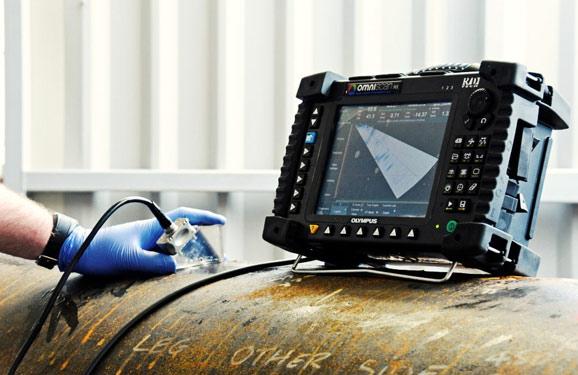
In the fast-paced world of industrial manufacturing and heavy construction, every second the clock ticks represents a penny spent. Critical infrastructure work requires absolute certainty about the strength of welds and the integrity of pipelines. Phased Array Ultrasonic Testing by companies like RVS Quality Certifications Pvt. Ltd. appears as a crucial testing solution that provides fast results to enhance both safety measures and operational performance. If you’ve ever wondered how this testing can reduce inspection time, the answer lies in its ability to visualise the "unseen" in real-time without the slow, clunky setups of the past.
Beyond the Limitations of Yesterday
Traditional inspections often felt like trying to find a needle in a haystack while wearing oven mitts. You had to move sensors inch by inch, slowly mapping out a surface and hoping you didn't miss a hairline fracture. Modern technology has flipped that script. Instead of a single crystal sending out one lonely beam, we now use multi-element probes that can sweep through various angles simultaneously. It’s the difference between exploring a dark room with a penlight versus turning on a massive floodlight.
-
Multi-angle beam steering allows for a comprehensive scan from a single stationary position on the metal.
-
Real-time data visualization means inspectors can see a "slice" of the material instantly on their screens.
-
The elimination of chemical developers and film—often used in X-rays—slashes the wait time from hours to seconds.
The Power of Speed in Detection
One of the biggest bottlenecks in any project is the "inspection pause." This is when work stops so the safety crew can do their thing. However, by utilizing professional Ultrasonic Testing Services, companies are finding they can clear checkpoints faster than ever before. Because these systems can cover a larger surface area in a single pass, the total "hands-on" time required for an inspector is cut by nearly half. This isn't just about moving fast; it’s about being incredibly thorough while the clock is running.
Investing in the Right Skillset
Of course, the fanciest machine in the world is just a paperweight if the person holding it doesn't know how to read the data. This is why many industrial firms are sending their internal teams to NDT Level 2 Certification Courses. Having a certified expert on-site means you don't have to wait for an external consultant to travel to your location every time a minor question arises. A Level 2 technician has the depth of knowledge to interpret complex scans, set up the equipment for specialized jobs, and provide immediate "go/no-go" decisions that keep the assembly line moving.
The Silent Heroes of Machine Longevity
While we often focus on the massive steel structures, the smaller mechanical components are what keep the facility alive day in and day out. Heavy-duty machinery relies on a delicate balance of power and tension. This is where high-quality parts like Turboflex V Belts come into play. When integrated into a system supported by comprehensive Non Destructive Testing Services, these belts ensure that the power transmission remains smooth and vibration-free. A steady system is much easier to inspect because there is less mechanical "noise" interfering with the sensitive ultrasonic waves.
-
Regular vibration analysis helps pinpoint exactly when a belt needs tensioning before it causes a bearing failure.
-
High-performance belts reduce the thermal stress on pulleys, which preserves the structural integrity of the drive system.
-
A well-maintained drive train prevents the micro-fractures in motor mounts that ultrasonic tools are designed to find.
-
Ensuring smooth power flow extends the intervals between major structural inspections, saving both time and money.
Precision Without the Destruction
The most beautiful thing about these modern methods is that they are entirely non-invasive. In the old days, you might have had to cut a sample out of a pipe to test its strength. Today, we leave the equipment exactly as it is. This "look-but-don't-touch" approach means that as soon as the probe leaves the surface, the machine can be switched back on. There is no cleanup, no hazardous waste disposal, and no repair work needed to fix the damage caused by the inspection itself.
Staying Ahead of the Curve
The push for faster, safer, and more reliable infrastructure isn't slowing down anytime soon. By embracing the speed of advanced sound-wave technology and the reliability of premium mechanical components, businesses are finding that they can have the best of both worlds: uncompromised safety and record-breaking efficiency. When you stop looking at inspections as a hurdle and start seeing them as a high-speed data stream, your entire operational philosophy shifts. The future of industry isn't just about building bigger; it’s about building smarter and checking faster.

 Arabic
 French
 Spanish
 Portuguese
 Deutsch
 Turkish
 Dutch
Dutch
 Italiano
 Russian
 Romaian
 Portuguese (Brazil)
 Greek
Greek