


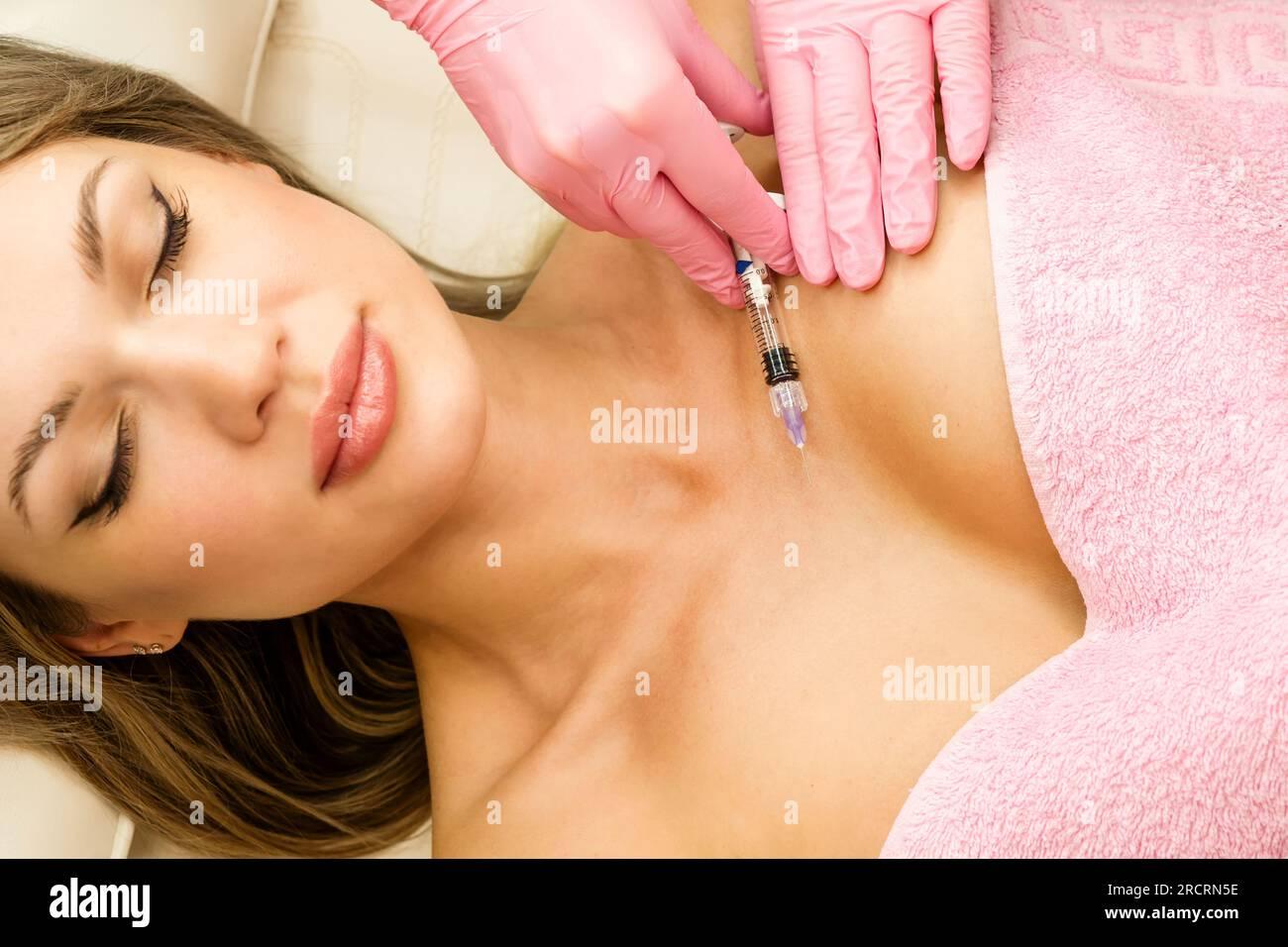
Understanding the Ingredients: What is Inside Your Breast Filler?
When considering any aesthetic enhancement, the first question many women ask is: "What exactly is being put into my body?" For those exploring breast filler injections in Riyadh(حقن الفيلر للثدي في الرياض), the answer is rooted in biochemistry and advanced material science. Modern fillers are no longer the "mystery compounds" of decades past; today, they are highly purified, biocompatible substances designed to mimic the body's natural tissues. By understanding the primary ingredients—ranging from hydrating sugar molecules to your own biological cells—you can make an informed choice that aligns with your health priorities and aesthetic goals. In Saudi Arabia’s sophisticated medical market, the transparency of ingredients is a cornerstone of patient safety and satisfaction.
The Primary Ingredient: Hyaluronic Acid (HA)
The most widely used substance in non-surgical breast enhancement is Hyaluronic Acid. While the name sounds clinical, HA is a naturally occurring polysaccharide (a type of sugar) found in your skin, joints, and connective tissues.
-
The Science of HA: In its natural form, HA is a liquid that the body breaks down every few days. To create a breast filler, scientists use cross-linking technology. This process uses a chemical agent (usually BDDE) to create "bridges" between the HA molecules, transforming them into a stable, cohesive gel that can resist the body’s enzymes for 12 to 18 months.
-
The "Water-Sponge" Effect: HA is exceptionally hydrophilic, meaning it attracts water. Once injected, it draws moisture into the breast tissue, which provides the soft, supple, and hydrated feel that makes it indistinguishable from natural tissue.
-
Non-Animal Origin: Most premium HA fillers used in Riyadh are "NASHA" (Non-Animal Stabilized Hyaluronic Acid). These are synthesized in sterile laboratory environments through bacterial fermentation, ensuring there are zero animal proteins that could trigger an allergic reaction.
Autologous Fat: The "Bio-Filler"
For many, the ultimate "ingredient" is one that comes directly from their own body. Autologous fat transfer (or lipofilling) uses purified adipose tissue to add volume to the breasts.
-
The Composition: This "filler" is composed of living fat cells (adipocytes) and, crucially, adipose-derived stem cells.
-
The Purification Process: Before being reinjected, the fat harvested via liposuction is processed in a centrifuge to remove excess fluids, oils, and red blood cells. What remains is a concentrated "gold" graft of pure fat cells.
-
Biocompatibility: Because the ingredient is your own genetic material, there is a 0% risk of an allergic reaction or "rejection" by the immune system. Once the fat cells establish a blood supply in the breast, they become a permanent part of your anatomy.
Supportive Ingredients: Enhancing Comfort
The syringe containing your filler often includes more than just the volumizing agent. Several secondary ingredients are included to ensure a smooth procedure and recovery.
-
Lidocaine (The Numbing Agent): Most high-end breast fillers come "pre-mixed" with a small amount of lidocaine. This local anesthetic numbs the area from the inside out as the gel is being administered, making the process significantly more comfortable.
-
Phosphate Buffer: This is a stabilizing solution that keeps the pH level of the filler gel identical to the natural pH of human tissue. This prevents the "stinging" sensation that can sometimes occur when a foreign substance enters the body.
-
Saline Solution: A sterile salt-water solution is often used as a carrier for the gel or fat, ensuring it flows smoothly through the fine-gauge needles or cannulas used during the procedure.
Comparison of Filler Ingredients
| Ingredient Type | Source | Primary Function | Duration |
| Hyaluronic Acid | Bio-fermentation | Volumization & Hydration | 12–18 Months |
| Autologous Fat | Patient's own body | Natural tissue replacement | Semi-Permanent |
| Poly-L-Lactic Acid | Synthetic Polymer | Collagen Stimulation | 2+ Years |
| Lidocaine | Synthetic | Pain Management | Immediate/Temporary |
Avoiding "Industrial" Ingredients
Safety in the Riyadh market is defined not just by what is in the filler, but by what is left out. In unregulated markets, dangerous substances like liquid silicone or industrial-grade polymers have been used.
Breast filler injections in Riyadh focus exclusively on substances that the body can either naturally integrate or safely metabolize. The SFDA (Saudi Food and Drug Authority) strictly prohibits permanent, non-resorbable synthetic gels in the breast tissue because they can migrate or interfere with cancer screenings. By sticking to approved ingredients like HA and autologous fat, patients avoid the risk of chronic inflammation or hard nodules (granulomas).
The Role of Trace Minerals and Stabilizers
In some newer generations of "bio-stimulatory" fillers, you may find trace amounts of Calcium Hydroxylapatite or specialized proteins. These ingredients act as "signaling molecules" that tell your body's fibroblasts to produce more of your own natural collagen. This means that even as the initial filler ingredients are absorbed by your body, they leave behind a framework of new, natural tissue that helps maintain the shape and "perkiness" of the bust.
Conclusion
The ingredients inside modern breast fillers are a masterclass in biocompatibility. Whether you choose the moisture-binding power of Hyaluronic Acid or the living-tissue benefits of a fat transfer, you are utilizing materials that the human body recognizes and accepts. When undergoing breast filler injections in Riyadh, you can rest assured that the substances used are purified to the highest medical standards, designed to provide a beautiful silhouette while prioritizing your long-term health and internal harmony.

 Arabic
 French
 Spanish
 Portuguese
 Deutsch
 Turkish
 Dutch
Dutch
 Italiano
 Russian
 Romaian
 Portuguese (Brazil)
 Greek
Greek