


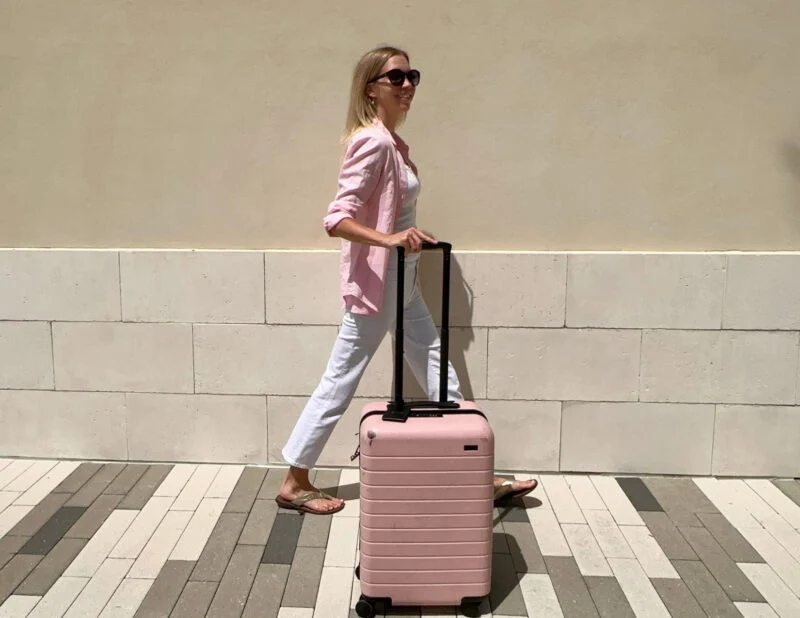
Travel looks effortless on social media.
Rolling suitcases.
Stylish backpacks.
Coffee in hand.
Airport lights.
Behind those images is a hidden reality: tired shoulders, tight backs, and aching feet.
Few travelers realize how much their luggage shapes the way they move. The way you carry your bags doesn’t just affect your arms — it changes your posture, your balance, and even how your feet absorb pressure.
Understanding how luggage carrying impacts your posture can protect your body from long-term strain and make every journey more comfortable.
The Body Wasn’t Designed for Uneven Loads
Human posture evolved for balance.
Your spine stacks vertically.
Your head stays centered.
Your hips distribute weight evenly.
When you carry luggage, this balance shifts.
A heavy shoulder bag.
A backpack worn low.
A suitcase pulled to one side.
Each creates load imbalance, forcing your body to compensate.
Your muscles adjust instantly — but not safely.
How Compensation Alters Alignment
When weight pulls you off-center, your body reacts automatically.
You lean slightly.
You rotate your torso.
You lift one shoulder.
You stiffen one hip.
These subtle shifts protect you short-term but strain you long-term.
Over time, this leads to gait changes, where your walking pattern becomes uneven and inefficient.
You may not notice it — but your feet and joints do.
Why Your Feet Feel It First
Postural imbalance travels downward.
When your upper body tilts, pressure redistributes through your legs.
One foot bears more weight.
One arch works harder.
One heel absorbs more shock.
This uneven load increases fatigue and inflammation.
Many travelers recognize this pattern after experiencing long standing and walking days like those described in museum fatigue, where posture and foot pain become closely linked.
Your feet become the final shock absorbers.
How Carrying Luggage Increases Muscle Tension
Holding weight activates stabilizing muscles continuously.
Neck muscles tighten.
Shoulders elevate.
Core stiffens.
Hips restrict movement.
This constant tension reduces flexibility.
Restricted movement means less shock absorption and more joint stress.
Fatigue accelerates.
The Psychological Side of Carrying Weight
Heavy luggage doesn’t just affect muscles.
It affects behavior.
You rush to put bags down.
You avoid stairs.
You limit exploration.
You look for shortcuts.
This reduces movement quality and increases stiffness.
Comfort becomes secondary to relief.
Why Rolling Bags Aren’t Always Better
Wheeled luggage seems easier.
But it creates asymmetry.
Pulling with one arm twists the spine.
Your stride shortens.
Your shoulder rotates repeatedly.
After hours, this leads to imbalance and soreness.
Switching sides helps — but doesn’t eliminate strain.
Footwear Becomes Critical Under Load
When carrying weight, your feet experience amplified pressure.
Every step feels heavier.
Unsupportive shoes magnify this stress.
That’s why many experienced travelers rely on walking sandals with arch support, cushioned travel sandals, and supportive comfort footwear when moving with luggage.
Proper support stabilizes your foundation.
How Poor Posture Affects Breathing and Energy
Misalignment compresses the chest.
Breathing becomes shallow.
Oxygen delivery decreases.
Fatigue increases.
Low energy worsens movement quality — creating a cycle of discomfort.
Simple Habits That Protect Your Posture
Small changes make a big difference.
Helpful strategies include:
- Wearing backpacks high and centered
- Switching carrying sides regularly
- Using both straps when possible
- Keeping loads under 15% of body weight
- Engaging core muscles while walking
These habits reduce compensation.
Choosing Bags That Support Your Body
Not all luggage is equal.
Look for:
- Ergonomic straps
- Lightweight frames
- Balanced compartments
- Adjustable fit
Better design means less strain.
When Postural Strain Becomes a Warning Sign
Pay attention if you notice:
- One-sided back pain
- Persistent shoulder tension
- Uneven shoe wear
- Hip discomfort
These signs suggest chronic imbalance.
Early correction prevents long-term injury.
Why Posture Protects Your Travel Experience
Good posture preserves energy.
You walk farther.
You stand longer.
You explore more.
Instead of fighting your body, you move with it.
Supporting Your Base: The Role of Footwear
When carrying weight, stability starts at the ground.
Supportive shoes provide:
- Firm arch alignment
- Shock absorption
- Balanced contact
Many women choose supportive walking sandals, arch-support travel sandals, and lightweight comfort footwear to maintain posture under load.
Your foundation matters.
Final Reflection
Luggage is part of travel.
Pain doesn’t have to be.
When your body stays aligned, every journey feels lighter.
Not because your bags weigh less.
Because you carry them better.

 Arabic
 French
 Spanish
 Portuguese
 Deutsch
 Turkish
 Dutch
Dutch
 Italiano
 Russian
 Romaian
 Portuguese (Brazil)
 Greek
Greek