


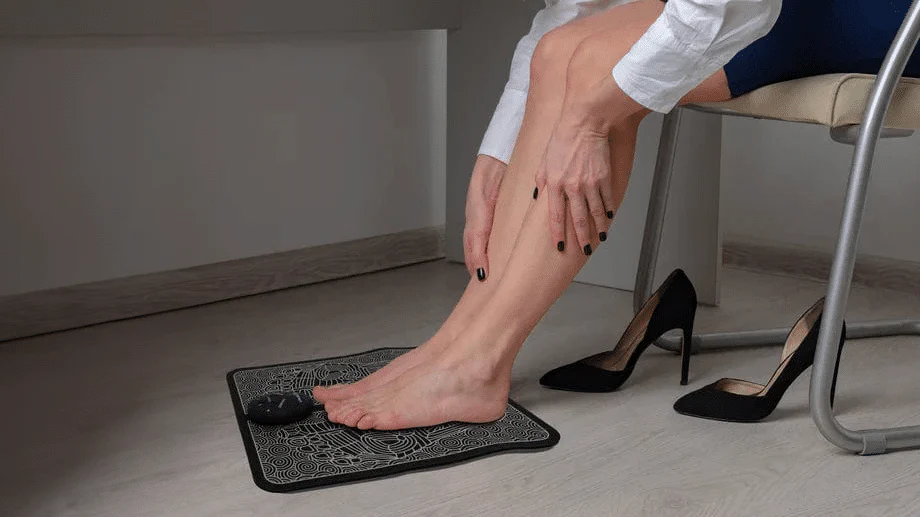
Foot pain, leg fatigue, and daily stress have quietly become part of modern life. Whether you sit at a desk for 8–10 hours, stand all day at work, or simply deal with aging joints, your feet often carry the heaviest burden. Because of this, at-home wellness devices — especially foot massagers — have become extremely popular.
But today, buyers face a new question:
Should you choose an EMS foot massage machine or a traditional foot massager?
At first glance, both seem to do the same thing: relax your feet.
In reality, they work in completely different ways — and the difference directly affects pain relief, circulation, and long-term comfort.
This detailed beginner-friendly guide explains how each device works, compares their benefits, and helps you decide which one is truly better for relaxation and pain management.
First, Understand the Two Technologies
Before comparing, you need to understand a simple truth:
These two devices do not use the same therapy method.
They are built on two completely different scientific principles.
What Is an EMS Foot Massage Machine?
An EMS (Electrical Muscle Stimulation) foot massage machine is a device that sends low-frequency electrical impulses through the soles of your feet.
These impulses stimulate motor nerves and cause muscles to contract and relax rhythmically — similar to natural muscle movement during walking.
Instead of physically pressing your foot, the device activates muscles from inside the body.
Think of it as:
exercise for your feet while you are sitting still.
The electrical pulses:
-
activate foot and calf muscles
-
stimulate nerves
-
improve blood circulation
-
reduce fatigue
Muscle contractions created by EMS act like a pump, helping push blood and lymphatic fluid upward toward the heart.
What Is a Traditional Foot Massager?
A traditional foot massager uses mechanical pressure. It relies on physical components such as:
-
rotating rollers
-
kneading nodes
-
vibration motors
-
air compression
-
heated plates
This type of device imitates a human massage by physically pressing on pressure points in your feet.
It mainly targets:
-
skin
-
fascia (soft tissue)
-
pressure points
Traditional massage therapy has long been known to help relaxation and improve circulation temporarily.
The Core Difference (Very Important)
| EMS Foot Massage Machine | Traditional Foot Massager |
|---|---|
| Stimulates muscles internally | Presses externally |
| Uses electrical impulses | Uses mechanical rollers |
| Works on nerves & circulation | Works on soft tissue |
| Passive exercise effect | Surface relaxation |
In simple words:
Traditional = massage
EMS = therapy + muscle activation
Pain Relief: Which Works Better?
Pain relief is the number one reason people buy a foot massager.
But pain has different causes:
-
muscle fatigue
-
nerve irritation
-
poor circulation
-
inflammation
-
stiffness
Each device treats different causes.
How EMS Helps Pain Relief
EMS addresses the root causes of many chronic foot problems.
Electrical stimulation:
-
Activates muscles
-
Improves oxygen supply
-
Stimulates nerve pathways
-
Reduces swelling
Studies and clinical observations show EMS stimulation can help neuropathy, myalgia, and circulation-related foot pain. foot massager with EMS technology
Because it stimulates nerves, it may also reduce pain signals sent to the brain.
This is why many rehabilitation centers use electrical stimulation in physical therapy.
It is especially useful for:
-
cold feet
-
numbness
-
tingling
-
diabetic neuropathy
-
sedentary lifestyle pain
How Traditional Foot Massagers Relieve Pain
Traditional devices are excellent for muscle tension and soreness.
Rollers and kneading nodes:
-
loosen tight fascia
-
relax stiff tissue
-
relieve pressure points
They work best for:
-
plantar fasciitis soreness
-
post-walking fatigue
-
temporary aches
However, they mainly treat surface discomfort, not circulation or nerve function.
Pain Relief Verdict
| Condition | Better Option |
|---|---|
| Nerve pain / numbness | EMS |
| Circulation problems | EMS |
| Muscle soreness | Traditional |
| Immediate comfort | Traditional |
| Chronic fatigue | EMS |
Winner for long-term pain relief: EMS foot massage machine
Why? Because it treats the cause, not just the feeling.
Relaxation & Comfort Comparison
Relaxation is different from therapy.
Here, traditional massagers perform differently.
Traditional Massager Relaxation
Traditional devices feel closer to a real spa massage.
They provide:
-
kneading sensation
-
pressure point relief
-
heat comfort
You feel relaxed immediately.
This is why many people prefer them after a long day — the results are instant. electronic foot massager
EMS Relaxation
EMS feels unusual at first.
You don’t feel “massage.”
You feel gentle pulses or tapping sensations.
However, those pulses activate the parasympathetic nervous system — the body’s rest-and-recovery mode — which helps reduce stress hormones.
After 10–20 minutes, users often feel:
-
lighter legs
-
reduced fatigue
-
calmer body
So EMS relaxation is deeper but slower.
Relaxation Verdict
| Category | Winner |
|---|---|
| Immediate relaxation | Traditional |
| Deep body relaxation | EMS |
Circulation Improvement (The Biggest Difference)
Here is where the technologies separate dramatically.
Poor circulation causes:
-
heavy legs
-
swelling
-
fatigue
-
cold feet
EMS Circulation Effect
EMS contractions push blood back up the legs like a “second heart.”
This process:
-
improves venous return
-
reduces swelling
-
increases oxygen supply
Rhythmic contractions specifically enhance localized blood flow and reduce heaviness in the lower legs.
Traditional Massager Circulation Effect
Traditional massagers improve circulation temporarily by pressing tissues.
Once you remove your feet, the effect fades quickly because muscles are not activated.
Circulation Verdict
EMS foot massage machine wins clearly.
It actively moves blood.
Traditional massagers only stimulate skin and tissue.
Daily Fatigue and Energy Levels
Many people don’t realize:
Foot fatigue affects whole-body energy.
Inactive leg muscles cause blood pooling in the lower body — which contributes to tiredness.
EMS helps by activating muscles even while resting, a form of passive exercise.
This is why office workers and elderly users often report less daily fatigue after regular use.
Traditional massagers feel good, but they do not activate muscles.
Convenience & Cost
EMS Device
-
lightweight
-
portable mat
-
quiet
-
use while watching TV
-
reusable daily
Traditional Massager
-
bulky
-
heavier
-
louder
-
requires sitting position
Additionally, at-home EMS devices can be more cost-effective over time compared with repeated professional massages.
Safety
Both are generally safe, but EMS requires extra caution.
Avoid EMS if you have:
-
pacemakers
-
pregnancy
-
certain neurological conditions
Traditional massagers have fewer medical restrictions.
Who Should Choose EMS?
Best for:
-
office workers
-
seniors
-
people with cold feet
-
swelling in ankles
-
neuropathy symptoms
-
chronic fatigue
Who Should Choose Traditional?
Best for:
-
athletes after workouts
-
people wanting spa-like relaxation
-
muscle soreness relief
-
short-term comfort
Final Verdict: Which Is Better?
Here is the honest answer:
They are not competitors — they are different tools.
| Goal | Better Choice |
|---|---|
| Deep therapy | EMS |
| Immediate relaxation | Traditional |
| Circulation | EMS |
| Muscle soreness | Traditional |
| Chronic fatigue | EMS |
| Spa experience | Traditional |
But if you want one device for overall health benefits and long-term pain relief, the EMS foot massage machine is generally the better choice.
Why?
Because it works beyond massage — it stimulates muscles, nerves, and circulation at the same time.
Traditional massagers make your feet feel better.
EMS helps your feet function better.
Final Thoughts
Foot care is often ignored until pain appears. By then, circulation issues, muscle weakness, and fatigue are already present.
A traditional foot massager is excellent for comfort and relaxation.
An EMS foot massage machine, however, acts more like a wellness therapy device.
In simple terms:
-
Traditional massage = comfort
-
EMS therapy = recovery
The best option ultimately depends on your needs.
But for modern lifestyles dominated by sitting, screen time, and inactivity, EMS technology offers a more comprehensive solution for both pain relief and long-term relaxation.
Your feet support your entire body every day.
Choosing the right recovery tool can improve not only foot comfort — but overall energy, mobility, and quality of life.

 Arabic
 French
 Spanish
 Portuguese
 Deutsch
 Turkish
 Dutch
Dutch
 Italiano
 Russian
 Romaian
 Portuguese (Brazil)
 Greek
Greek