


Hair loss is a common concern affecting millions of people worldwide, and dormant hair follicles play a central role in this condition. Dormant follicles are hair-producing structures that have stopped active growth, often due to hormonal changes, aging, stress, or genetic factors. Platelet-Rich Plasma (PRP) therapy has emerged as a revolutionary treatment that stimulates these inactive follicles, encouraging them to resume hair production. Understanding how PRP achieves this requires a closer look at the biological mechanisms involved and the step-by-step process by which PRP revitalizes hair follicles. Many people are exploring PRP hair treatment in Riyadh as an effective solution for thinning hair and hair loss.
Understanding Dormant Hair Follicles
Hair follicles naturally go through cycles of growth (anagen), regression (catagen), rest (telogen), and shedding (exogen). Dormant or miniaturized follicles are typically stuck in the resting or telogen phase for prolonged periods, resulting in thinning hair or bald patches. These follicles still exist beneath the scalp but lack the stimulation required to produce thick, healthy hair. The challenge in treating hair loss lies in reactivating these dormant follicles and creating an environment that supports sustained hair growth.
The Role of Platelet-Rich Plasma
PRP therapy utilizes the patient’s own blood, processed to concentrate platelets and growth factors, which are key players in tissue regeneration and healing. Platelets contain proteins and signaling molecules such as platelet-derived growth factor (PDGF), vascular endothelial growth factor (VEGF), transforming growth factor (TGF), and epidermal growth factor (EGF). These growth factors are essential for cellular proliferation, tissue repair, angiogenesis (formation of new blood vessels), and activation of stem cells within the hair follicle. When PRP is injected into the scalp, these biological agents provide the critical signals that dormant follicles need to re-enter the active growth phase.
Mechanism of Follicle Stimulation
The stimulation of dormant hair follicles by PRP occurs through multiple interconnected processes:
-
Activation of Stem Cells: Hair follicles contain stem cells located in the bulge area, which remain inactive when follicles are dormant. Growth factors in PRP activate these stem cells, prompting them to proliferate and differentiate into specialized cells that contribute to new hair formation. This activation essentially “wakes up” the follicle and initiates the hair production cycle.
-
Promotion of Angiogenesis: Adequate blood supply is essential for follicle health. VEGF in PRP promotes the formation of new capillaries in the scalp, improving oxygen and nutrient delivery to the dormant follicles. This enhanced circulation creates an optimal environment for follicular activity, supporting the growth of thicker and stronger hair strands.
-
Cellular Regeneration: PRP growth factors stimulate dermal papilla cells, which are critical for hair follicle function. Dermal papilla cells regulate the hair cycle and communicate with follicular stem cells to promote growth. By enhancing their activity, PRP encourages dormant follicles to re-enter the anagen phase, leading to the emergence of new hair.
-
Reduction of Inflammation: Chronic inflammation in the scalp can contribute to follicle miniaturization and dormancy. PRP contains anti-inflammatory proteins that reduce local inflammation, creating a healthier environment for follicle activation. This not only revitalizes dormant follicles but also protects existing hair from further thinning.
-
Collagen Production and Scalp Health: PRP also stimulates fibroblasts in the scalp, leading to increased collagen production. Collagen strengthens the scalp’s extracellular matrix, providing structural support for hair follicles and enhancing their ability to regenerate. A healthier scalp ensures that dormant follicles receive the support needed to resume growth.
The Injection Process and Follicular Response
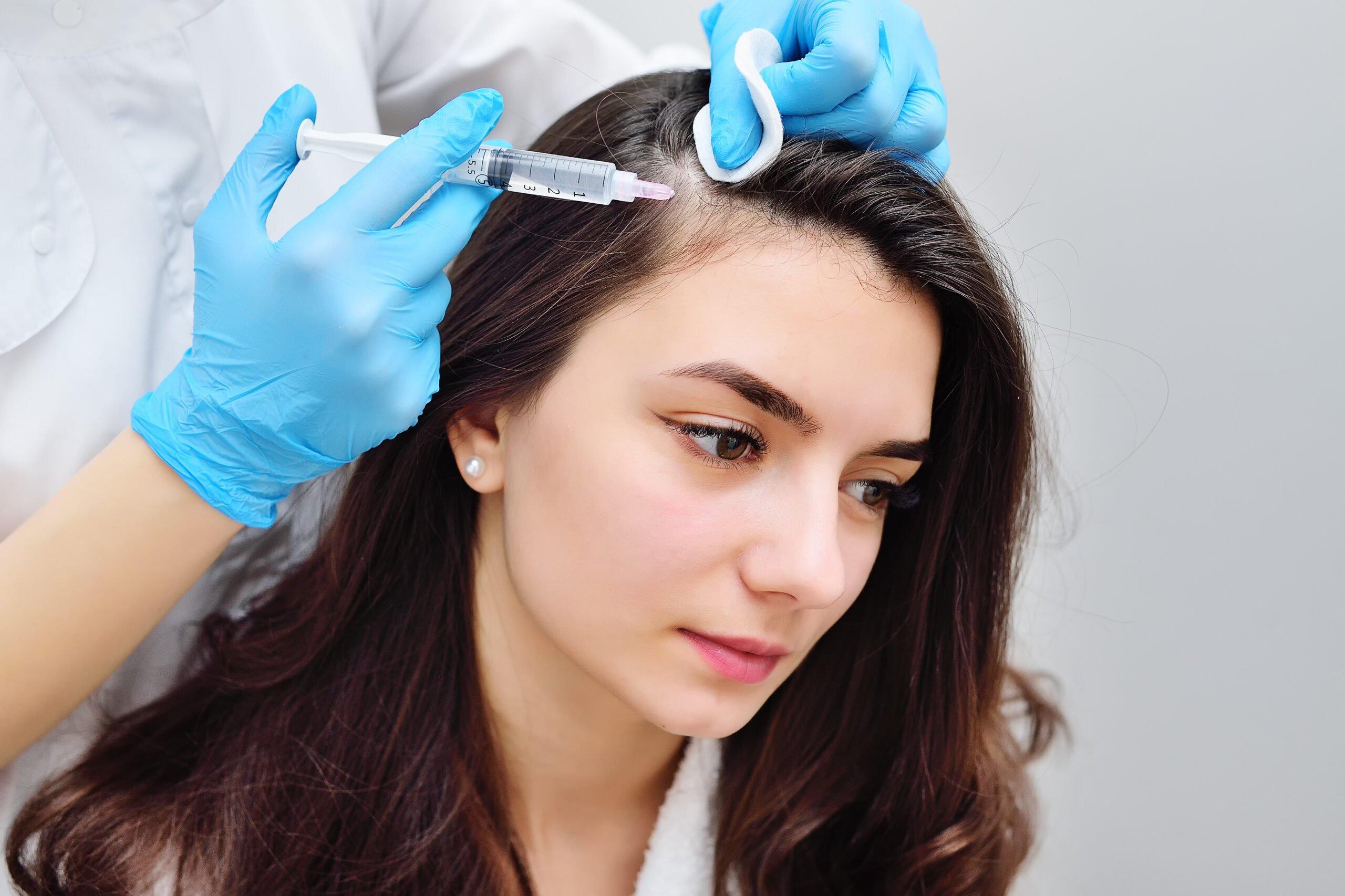
During a PRP session, the concentrated plasma is injected into targeted areas of the scalp where hair thinning or follicular dormancy is present. The micro-injections deliver growth factors directly to the follicles, triggering the biological processes described above. Multiple sessions are typically recommended, spaced several weeks apart, to provide sustained stimulation and maximize follicular activation.
Results and Timeline
The response of dormant follicles to PRP therapy is gradual. In the initial weeks, microscopic changes occur, such as cellular activation and improved blood supply. By the second to fourth month, early hair regrowth may be observed in the treated areas. Significant improvements, including increased hair density and thickness, generally become noticeable around six months, with continued enhancement over the following months. Maintenance sessions help ensure that follicles remain active and hair growth is sustained over time.
Conclusion
PRP therapy stimulates dormant hair follicles by harnessing the body’s natural growth factors to activate stem cells, promote angiogenesis, reduce inflammation, and enhance scalp health. By addressing the underlying biological mechanisms of hair dormancy, PRP encourages follicles to re-enter the active growth phase, resulting in thicker, healthier, and more resilient hair. With consistent treatment and proper scalp care, PRP offers an effective and natural solution for those struggling with hair thinning or follicular dormancy, providing both aesthetic and psychological benefits over time.

 Arabic
 French
 Spanish
 Portuguese
 Deutsch
 Turkish
 Dutch
Dutch
 Italiano
 Russian
 Romaian
 Portuguese (Brazil)
 Greek
Greek