


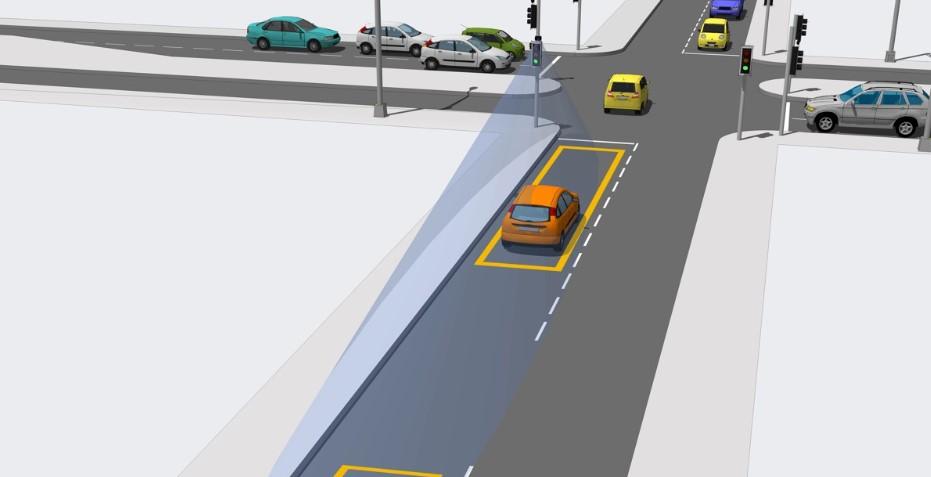
Traffic congestion, long wait times at intersections, and inefficient traffic flow are common challenges faced by urban areas worldwide. To tackle these issues, cities rely on advanced traffic management systems, and one of the most crucial components of these systems is the traffic loop detector.
What is a Traffic Loop Detector?
A traffic loop detector is an electronic device embedded in roadways that detects the presence of vehicles. It typically consists of a loop of wire installed under the pavement, connected to a control unit. When a vehicle passes over or stops above the loop, the metal in the vehicle disrupts the electromagnetic field generated by the loop. This change is registered by the control unit, signaling the presence of a vehicle.
These detectors are widely used in traffic lights, toll booths, highway monitoring, and intelligent transportation systems (ITS). Their main function is to help manage traffic efficiently and safely.
How Traffic Loop Detectors Work
Traffic loop detectors operate on a simple principle: induction.
-
Installation: A loop of insulated wire is cut or grooved into the pavement, usually in a rectangular or circular shape.
-
Electromagnetic Field: The wire loop is connected to a detector unit that generates an electromagnetic field around it.
-
Vehicle Detection: When a vehicle’s metal mass passes over the loop, it changes the inductance of the loop.
-
Signal Transmission: The detector sends this information to traffic lights or traffic monitoring systems, triggering actions such as turning the light green or recording vehicle count and speed.
Some modern systems also integrate advanced algorithms to differentiate between types of vehicles, helping with traffic flow analysis and urban planning.
Applications of Traffic Loop Detectors
Traffic loop detectors play a vital role in smart traffic management:
-
Traffic Signal Control: They detect waiting vehicles at intersections, allowing traffic lights to adapt dynamically to real-time traffic conditions, reducing unnecessary delays.
-
Vehicle Counting and Monitoring: Loops collect data on traffic density, peak hours, and vehicle speed, which helps in traffic studies and infrastructure planning.
-
Toll Collection Systems: Many toll booths rely on loop detectors to identify vehicles for automated payment systems.
-
Parking Management: Loops in parking lots help detect available spaces, guiding drivers to free spots efficiently.
Advantages of Traffic Loop Detectors
Traffic loop detectors offer multiple benefits for urban traffic management:
-
Accuracy: They provide precise detection of vehicles at intersections.
-
Durability: Embedded in the road surface, they are protected from weather conditions.
-
Efficiency: They help optimize traffic light timings, reducing congestion and fuel consumption.
-
Integration: They can be easily integrated with other smart transportation systems.
Limitations
Despite their benefits, traffic loop detectors have some limitations:
-
Installation Disruption: Installing loops requires cutting into the road surface, which can temporarily disrupt traffic.
-
Maintenance: Roadwork and wear and tear can damage the loops, requiring repairs.
-
Sensitivity: Heavy trucks or motorcycles may sometimes be detected inaccurately if the system isn’t properly calibrated.
The Future of Traffic Detection
While traditional loop detectors remain common, emerging technologies like video detection, radar-based sensors, and AI-powered traffic monitoring systems are complementing or replacing loop detectors in some areas. However, the simplicity, reliability, and cost-effectiveness of loop detectors ensure they will remain a key part of traffic management for years to come.
Conclusion
Traffic loop detectors are more than just wires in the road—they are a critical part of the intelligent transportation infrastructure that keeps cities moving. By detecting vehicles in real-time, they allow traffic signals to respond dynamically, reduce congestion, and provide valuable data for urban planners. Whether in a busy city intersection or a toll highway, traffic loop detectors quietly work behind the scenes to make our daily commutes smoother and safer.

 Arabic
 French
 Spanish
 Portuguese
 Deutsch
 Turkish
 Dutch
Dutch
 Italiano
 Russian
 Romaian
 Portuguese (Brazil)
 Greek
Greek