


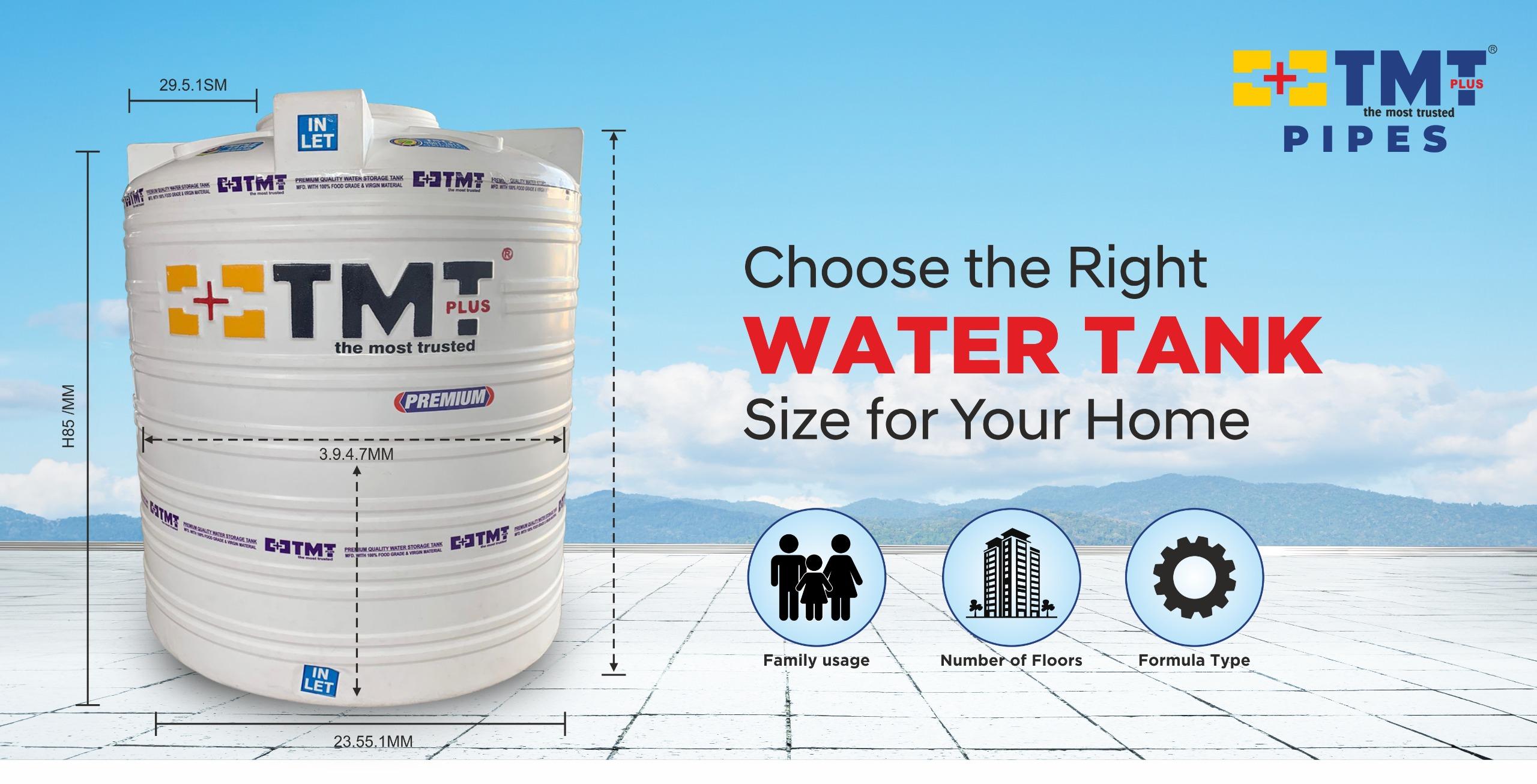
A water tank plays a silent but essential role in everyday life. Whether it’s for drinking, cooking, bathing, or cleaning, uninterrupted water availability depends on choosing the right tank size. Unfortunately, many households end up with tanks that are either too small or unnecessarily large, simply due to a lack of clear guidance.
The good news is that selecting the correct plastic water tank does not require technical knowledge or complex calculations. All you need is a basic understanding of daily water consumption.
How Much Water Do You Really Need?
In most Indian homes, one person consumes around 150 litres of water per day. This includes:
-
Drinking and cooking
-
Bathing
-
Washing clothes and utensils
-
Toilet flushing
-
Cleaning
The Easy Calculation Method
Daily Water Requirement = Number of People × 150 litres
For example:
-
A family of three → 3 × 150 = 450 litres
Recommended tank: 500 litres -
A family of five → 5 × 150 = 750 litres
Recommended tank: 1000 litres for added safety
When to Increase Tank Size
A larger plastic water tank is recommended if:
-
Water supply is irregular
-
You need backup storage
-
You live in an apartment on higher floors
-
You use water-intensive appliances
-
You expect higher usage in the future
Adding 10–20% extra capacity ensures you never face shortages.
Why Plastic Water Tanks Are Preferred
Modern plastic water tanks are lightweight, rust-free, and designed for Indian weather conditions. High-quality tanks are made from food-grade plastic, feature UV protection, and use multi-layer construction to maintain water purity and temperature.
Smart Buying Tip
A tank that is too small causes daily inconvenience, while an oversized tank wastes money and space. The ideal water tank matches your household size, daily usage, and future needs.
Final Guidance
-
Small families: 500–750 litres
-
Medium families: 1000 litres
-
Large families or commercial use: 1500 litres and above
Choosing the right plastic water tank ensures efficient water storage, better hygiene, and long-term reliability. When capacity and quality come together, water storage becomes effortless, dependable, and worry-free.

 Arabic
 French
 Spanish
 Portuguese
 Deutsch
 Turkish
 Dutch
Dutch
 Italiano
 Russian
 Romaian
 Portuguese (Brazil)
 Greek
Greek