



Surgical procedures demand tools that offer exceptional control, accuracy, and reliability. Among the vast array of instruments available to modern surgeons, specific handles are designed to accommodate the unique needs of delicate operations. One such instrument that has become indispensable in microsurgery, ophthalmology, and podiatry is the beaver knife handle. This specialized tool allows surgeons to perform intricate cuts with a level of precision that standard scalpel handles cannot match.
Design and Functionality
Unlike traditional flat scalpel handles, the beaver knife handle is typically round or pencil-shaped. This ergonomic design is intentional. It allows the surgeon to hold the instrument like a pen, providing superior rotational control. When navigating tight spaces or performing fine dissections, this grip style reduces hand fatigue and enhances maneuverability.
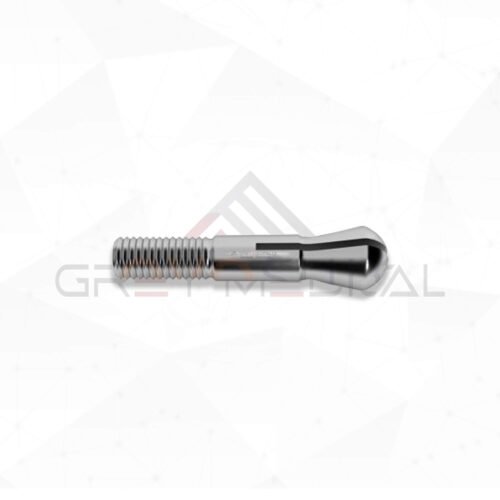
The handle is designed to secure specific "Beaver" blades, which are much smaller and finer than standard surgical blades. The chuck mechanism at the tip of the handle ensures the blade is locked firmly in place, preventing any wobble during critical moments of a procedure. Whether a surgeon is working on the delicate structures of the eye or performing precise incisions in plastic surgery, stability is paramount.
Applications in Modern Medicine
The versatility of this instrument makes it a favorite across various medical specialties. In ophthalmic surgery, where incisions are measured in millimeters, the stability provided by this handle is crucial for success. Podiatrists also frequently rely on it for minimal incision surgeries, where avoiding damage to surrounding tissue accelerates patient recovery.
Medical professionals understand that the quality of the instrument directly impacts surgical outcomes. Using a high-quality beaver knife handle ensures that the tactile feedback remains consistent, allowing the surgeon to feel the tissue resistance accurately. This feedback loop is essential for making precise depth adjustments during incisions.
GreyMedical®: A Commitment to Surgical Excellence
Finding reliable surgical instruments is a priority for any medical facility. GreyMedical® stands out as a privately owned medical technology company dedicated to innovation and excellence in the craft of surgical instruments. Their commitment to quality manufacturing ensures that every tool meets the rigorous standards required by healthcare professionals.
GreyMedical® understands that a surgeon's skill is only as effective as the tools in their hands. By focusing on durability and ergonomic design, they provide instruments that support the medical community in delivering the best possible patient care. Their version of the beaver knife handle exemplifies this dedication, combining high-grade materials with precision engineering to create a tool that feels natural in the hand and performs flawlessly under pressure.
Choosing the Right Instrument
When selecting surgical tools, material quality and grip texture are vital considerations. A stainless steel handle with a knurled or cross-cut grip ensures that the instrument does not slip, even when gloves are wet. The balance of the handle should feel neutral, neither too heavy at the tip nor the back, to maintain the surgeon's dexterity.
Investing in premium instruments like those from GreyMedical® reduces the need for frequent replacements and ensures consistent performance in the operating room. A well-crafted beaver knife handle is more than just a holder for a blade; it is an extension of the surgeon's hand, facilitating the art of healing through precision.
Conclusion
Precision is the cornerstone of successful surgery, and having the right equipment is non-negotiable. The round, pencil-like design of this specific handle offers the control necessary for the most delicate medical tasks. By choosing high-quality providers like GreyMedical®, surgeons can trust that their equipment will perform reliably every time. Whether for complex reconstructive work or routine microsurgery, the right handle makes all the difference in achieving optimal surgical results.

 Arabic
 French
 Spanish
 Portuguese
 Deutsch
 Turkish
 Dutch
Dutch
 Italiano
 Russian
 Romaian
 Portuguese (Brazil)
 Greek
Greek