


Water damage is a deceptive problem. What begins as a small, manageable leak can transform into a major structural and health issue with astonishing speed. The difference between a simple cleanup and a costly, invasive repair often comes down to time and recognition. Waiting too long or dismissing early warning signs can escalate the damage exponentially.
This isn't just about property; it’s about health, safety, and financial well-being. Knowing the critical signs that demand professional intervention can save you from immense stress and expense. This article will guide you through the unmistakable indicators that your home or business requires immediate professional help. Recognizing these signs and acting swiftly by calling a water damage restoration service is the most powerful step you can take to reclaim your space and your peace of mind.
1. Visible Standing Water or Active Leaking
This is the most obvious sign, but its urgency cannot be overstated.
-
The Situation: You walk into a basement and find an inch of water covering the floor. A pipe under your kitchen sink has burst, sending a steady stream onto the cabinets. Your ceiling has a visible drip, landing in a bucket with a persistent plink… plink… plink. This is an active emergency.
-
Why It Can’t Wait: Standing water acts fast. It seeps through seams in flooring, penetrates subfloors, and wicks up drywall through capillary action—a process where water defies gravity by traveling upward through porous materials. Within hours, saturated drywall loses its structural integrity, and laminate flooring begins to delaminate. Even clean water quickly becomes a breeding ground for microbes.
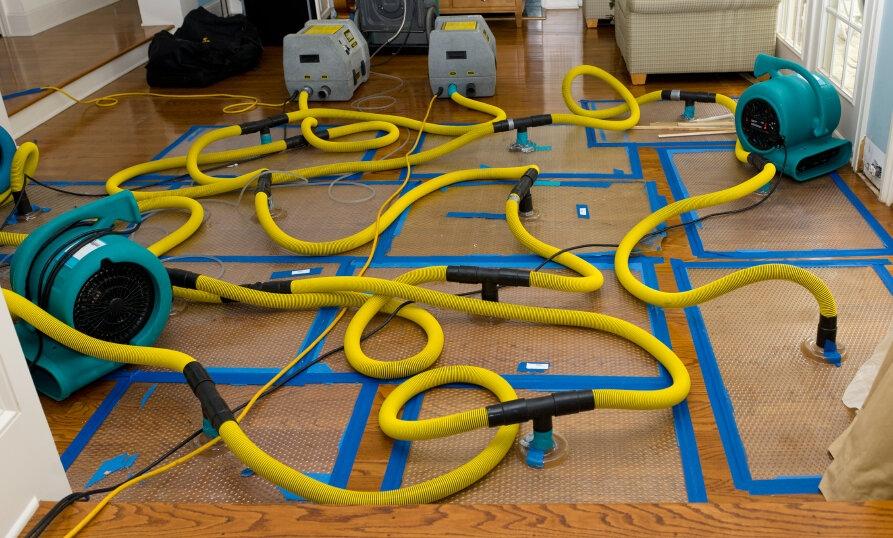
What a Professional Service Does: This is where a rapid response team shines. They don’t just remove the water you see. They arrive with truck-mounted extractors to remove hundreds of gallons quickly, then immediately set up a strategic drying system. Using moisture meters, they map the full extent of saturation, often discovering that water has traveled far from the original leak. Their goal is to stop the spread within minutes, not hours.
2. Persistent Musty Odors
Your nose is one of your most sensitive detection tools. A musty, earthy, or "old basement" smell is rarely just a smell.
-
The Situation: You return from a week’s vacation and notice a damp, unpleasant odor in a hallway or closet. You’ve cleaned the visible area of a past small leak, but the smell lingers. The aroma seems to get stronger on humid days.
-
The Hidden Reality: That distinctive odor is often the volatile organic compounds (VOCs) released by actively growing mold and mildew. Mold can begin to colonize damp materials within 24 to 48 hours. The smell indicates microbial growth is already present, likely in a hidden cavity like inside a wall, under flooring, or in ceiling insulation. It’s a symptom of a past water event that was never properly dried.
What a Professional Service Does: Technicians treat the odor as a clue, not just a nuisance. They use the smell to help locate hidden moisture pockets. Specialized tools like borescopes (small cameras) can be inserted into wall cavities to visually confirm growth. The solution isn’t masking the smell with air fresheners; it’s finding the source, safely containing and removing the mold-affected materials per industry standards, and thoroughly drying the structure to prevent recurrence.
3. Stains, Discoloration, and Warping
Visual changes to your building materials are direct messages from your property.
-
Stains on Walls/Ceilings: Yellow, brown, or copper-colored rings or streaks on ceilings or walls are classic signs of a past or ongoing leak. A "sagging" or bulging ceiling is an extreme red flag, indicating trapped water that is adding significant weight and threatening a collapse.
-
Warping and Buckling: Hardwood floors that cup (edges raised) or crown (center raised), laminate planks that buckle at the seams, or baseboards that appear to pull away from the wall are all crying out. These materials absorb moisture unevenly, causing them to expand and deform. Once warped, they rarely return to their original shape.
-
Bubbling and Blistering: Paint or wallpaper that bubbles is a clear sign of moisture trapped behind it. The adhesion fails as water pushes through.
What a Professional Service Does: A restoration expert assesses these signs to understand the water’s history and path. A stain on a ceiling directly under a bathroom suggests a toilet or tub leak. Warping along an exterior wall might point to a hidden siding or flashing failure. They determine what materials can be dried in place and what must be removed. For example, a section of hardwood flooring may be carefully lifted to dry the subfloor beneath, a process requiring specific expertise to minimize damage.
4. Changes in Material Texture and Integrity
Sometimes, you need to feel the damage.
-
Soft or Spongy Floors/Walls: Press on a laminate floor or tile and it feels soft or yields underfoot. Push on a wall or drywall and it feels damp and gives way slightly. This is a critical sign of advanced saturation. Drywall, when wet, loses its rigidity and its paper backing becomes a food source for mold.
-
Efflorescence on Foundation Walls: This appears as a white, chalky, crystalline deposit on concrete or brick. It occurs when water moves through the material, dissolves salts within it, and then deposits them on the surface as it evaporates. It’s clear evidence of ongoing moisture intrusion from the outside.
What a Professional Service Does: Tactile evidence often confirms the need for controlled demolition. Soft drywall is almost always removed, as its core cannot be effectively dried. A restoration team will cut away affected sections in a clean, measured way to expose the cavity for drying and to assess structural framing for damage. Addressing efflorescence involves diagnosing and correcting the exterior water source (like poor grading or cracked mortar) before cleaning and sealing the interior.
5. Signs of Mold Growth
Visible mold is a definitive indicator that a moisture problem has been present long enough for a colony to establish itself.
-
The Situation: You spot black speckles along a baseboard, a pinkish film in a shower corner that keeps returning, or a fuzzy grey patch on the back of a wardrobe placed against an exterior wall. Mold comes in many colors: black, green, white, orange.
-
Health Implications: For some, mold is a minor irritant. For others, especially those with allergies, asthma, or compromised immune systems, it can trigger significant respiratory issues, coughing, and headaches. Its presence means the indoor environment is compromised.
What a Professional Service Does: Professional restoration follows a strict protocol for mold remediation: containment, removal, cleaning, and drying. They will isolate the area with plastic sheeting and negative air pressure to prevent spores from spreading during the work. Affected porous materials are bagged and removed. Remaining surfaces are cleaned with antimicrobial agents. Crucially, they then diagnose and rectify the underlying moisture problem that allowed the mold to grow in the first place. Simply wiping away visible mold is a temporary and ineffective fix.
6. High Humidity and Condation Issues
Sometimes, the problem is in the air itself.
-
The Situation: Your windows are constantly fogged with condensation. The air in certain rooms feels thick and clammy. You notice a persistent damp feeling on towels or clothes in a closet. This indicates elevated relative humidity, often from a hidden leak or a chronic moisture issue like a cracked foundation.
-
The Risk: Sustained high humidity (above 60%) provides the perfect condition for mold growth on surfaces, even without a direct leak. It can warp wood furniture and cause paint to peel.
What a Professional Service Does: Professionals use hygrometers to measure humidity levels. They correlate this data with thermal imaging cameras, which can visually reveal cold spots in walls where moisture is evaporating and cooling the surface. Solving this may involve enhancing structural drying, improving ventilation, or identifying a hidden leak contributing to the ambient moisture load.
The Practical Benefits of Calling a Professional Service Immediately
Understanding these signs empowers you to act. The value of engaging a certified water damage restoration service at the first sign of trouble extends far beyond water removal:
-
Preserves Structural Integrity: They protect the bones of your building—the studs, joists, and subfloor—from rot and decay that can lead to terrifyingly expensive repairs.
-
Saves Money Long-Term: Immediate, thorough drying prevents the escalation of damage. What might cost a few thousand dollars to dry today could become a $50,000 renovation project if mold and rot set in.
-
Protects Health: By thoroughly drying and sanitizing the environment, they remove the conditions that lead to mold and bacterial growth, ensuring the air you breathe is safe.
-
Streamlines Insurance: Reputable services work directly with your insurance company, providing detailed documentation, moisture logs, and photos that support your claim and facilitate a smoother process.
-
Restores Peace of Mind: The greatest benefit is often intangible. Knowing experts have systematically addressed the problem, found its source, and restored your home to a dry, safe standard lets you sleep soundly again.
Ignoring the signs of water damage is a gamble with high stakes. Musty odors, suspicious stains, and warped floors are your property’s way of sending an SOS. Heeding that call promptly by contacting a professional water damage restoration service is the definitive act of care for your investment and your well-being. It’s the decision that moves you from crisis to resolution, ensuring your space is not just dried, but truly restored.

 Arabic
 French
 Spanish
 Portuguese
 Deutsch
 Turkish
 Dutch
Dutch
 Italiano
 Russian
 Romaian
 Portuguese (Brazil)
 Greek
Greek