



Pakistan–China Logistics Revolution: Paving the Way for a New Era of Regional Trade
Introduction
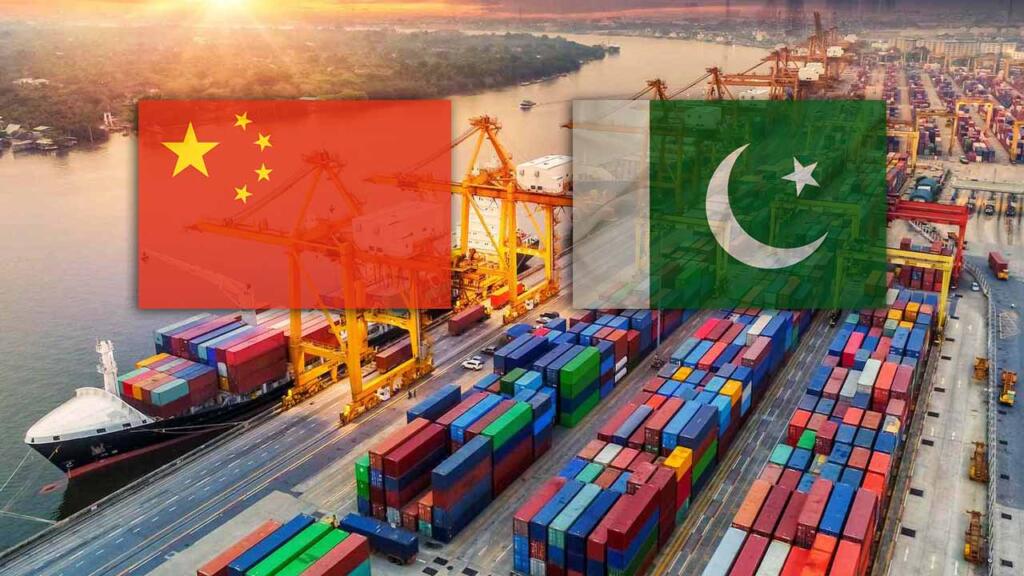
The trade and transport landscape of South and Central Asia is undergoing a historic transformation, led by what experts call the Pakistan–China Logistics Revolution. Fueled by the China–Pakistan Economic Corridor (CPEC), this revolution is not just about roads and ports — it’s about reshaping the global flow of goods, shortening supply chains, and positioning Pakistan as a regional logistics powerhouse.
From the towering peaks of the Karakoram to the deep waters of Gwadar Port, a seamless network of land, air, and sea corridors is redefining connectivity between China, South Asia, the Middle East, and Africa. This article explores how the Pakistan–China logistics partnership is unlocking trade opportunities, transforming infrastructure, and creating a new era of regional integration — along with the challenges that must be addressed to sustain its momentum.
The Foundation: China–Pakistan Economic Corridor (CPEC)
Launched in 2015 under China’s ambitious Belt and Road Initiative (BRI), the China–Pakistan Economic Corridor serves as the backbone of this logistics transformation. CPEC’s vision extends far beyond bilateral cooperation — it aims to create a multi-modal transport network connecting China’s western regions to the Arabian Sea via Pakistan.
Core Objectives of CPEC’s Logistics Network
-
Establish efficient trade routes between China and global markets through Pakistan.
-
Enhance regional integration by connecting South Asia, Central Asia, and the Middle East.
-
Develop modern logistics infrastructure, including roads, railways, ports, and dry ports.
-
Promote industrialization and trade diversification in Pakistan through special economic zones (SEZs).
At its heart, CPEC is transforming Pakistan from an import-dependent economy into a trade and transit hub — linking the East and West through a corridor of commerce.
The Logistics Revolution in Motion
The Pakistan–China logistics partnership has evolved across three major fronts: land transport corridors, air cargo routes, and maritime trade linkages. Together, these systems are creating an integrated trade ecosystem that is faster, cheaper, and more reliable.
1. Land Corridors: The Backbone of Regional Trade
The most visible element of this revolution lies on land. The Karakoram Highway (KKH) — stretching from Kashgar in China’s Xinjiang region to Pakistan’s northern territory of Gilgit–Baltistan — forms the primary land artery of CPEC.
Khunjerab Pass: A Gateway to Opportunity
The Khunjerab Pass, at over 15,000 feet, serves as the central link connecting the two nations. Recent investments have transformed this mountainous route into a viable commercial trade channel that now operates year-round with improved customs facilities.
In 2024, Pakistan and China launched a multimodal cargo route connecting Kashgar to the United Arab Emirates (UAE) through Pakistan under the TIR (Transports Internationaux Routiers) system. This route reduced delivery time from 30 days to just 10, allowing Chinese exports to reach Gulf markets faster than ever before.
Such efficiency upgrades signify a paradigm shift — Pakistan is now bridging trade flows between China, the Middle East, and Africa.
2. Air Cargo: Accelerating High-Value Trade
The air cargo segment of the Pakistan–China logistics revolution is accelerating fast. The launch of the Urumqi–Islamabad direct air cargo route in 2025 marked a major milestone in rapid logistics integration.
These dedicated cargo flights have opened new avenues for perishables, e-commerce shipments, and high-value goods.
-
Pakistani exporters can now ship fresh fruits, seafood, and flowers to China in hours instead of days.
-
Chinese machinery, electronics, and auto parts are arriving in Pakistan’s markets more efficiently.
-
The air link has also expanded to include routes from Nanning, Chengdu, and Kunming to Karachi and Lahore, strengthening cross-border supply chains.
As a result, Pakistan’s exporters are gaining better access to the Chinese market while importers are benefiting from faster and cheaper logistics services — a true win-win scenario.
3. Maritime Expansion: Gwadar Port as the Global Anchor
At the southern tip of the corridor lies the Gwadar Port, CPEC’s maritime jewel and one of South Asia’s most strategically located deep-sea ports. Gwadar’s proximity to the Strait of Hormuz — a major global energy chokepoint — positions it as a critical node in international shipping.
Gwadar enables:
-
Direct access for China to the Arabian Sea, bypassing longer maritime routes like the Malacca Strait.
-
Transshipment opportunities for Pakistani exports to Africa, Europe, and the Middle East.
-
Logistics diversification, reducing Pakistan’s dependence on Karachi and Port Qasim.
With the completion of Gwadar Free Zone and logistics parks, the port is expected to handle millions of tons of cargo annually. It symbolizes Pakistan’s transformation into a global logistics hub integrated into international supply chains.
Economic Benefits of the Logistics Revolution
The Pakistan–China logistics transformation has already begun delivering measurable economic benefits, from rising trade volumes to industrial expansion.
1. Boost in Bilateral and Regional Trade
Trade between Pakistan and China surpassed $23 billion in 2024, an 11% increase over the previous year. The improved logistics network has:
-
Lowered transit costs by up to 30% for certain goods.
-
Reduced transportation time by 50–70% on key routes.
-
Enabled new exporters — particularly SMEs — to participate in cross-border commerce.
Moreover, Pakistan’s strategic location is attracting transit trade from Central Asia, providing access to the Arabian Sea via Pakistani ports.
2. Industrialization and Job Creation
CPEC’s logistics infrastructure has catalyzed growth in Special Economic Zones (SEZs) such as Rashakai, Dhabeji, and Allama Iqbal Industrial City. These zones are becoming manufacturing and warehousing hubs, generating thousands of jobs in transportation, logistics, and value-added industries.
As supply chains expand, local industries are benefiting from technology transfer, foreign investment, and employment generation — key ingredients for Pakistan’s long-term economic sustainability.
3. Integration into Global Supply Chains
With improved connectivity, Pakistan is now becoming part of regional and global production networks. Raw materials can be imported from China, processed in Pakistan’s industrial zones, and exported to Middle Eastern or African markets.
This model allows Pakistan to move up the value chain — from a trading nation to a processing and logistics hub — a critical step toward economic diversification.
Strategic and Geopolitical Dimensions
The Pakistan–China logistics revolution carries profound strategic importance for both nations and the region.
-
For China, it provides a secure overland route to the Arabian Sea, diversifying trade and energy transport away from maritime chokepoints.
-
For Pakistan, it strengthens economic sovereignty, enhances infrastructure, and boosts its global relevance.
-
For the region, it offers an alternative connectivity model that promotes trade integration and stability.
In the long term, CPEC’s logistics corridors could also link Central Asia, Iran, and Turkey, creating a vast intercontinental trade web stretching from western China to Europe.
Challenges to Overcome
Despite promising progress, several challenges must be addressed for the logistics revolution to achieve its full potential.
1. Infrastructure Gaps
Pakistan’s internal logistics infrastructure still requires modernization. Outdated rail systems, limited cold-chain facilities, and congested highways hinder efficiency.
2. Customs and Regulatory Bottlenecks
Cross-border trade still faces delays due to inconsistent customs documentation and manual clearance procedures. Full adoption of digital customs systems and expansion of TIR operations are essential for smoother trade.
3. Security and Political Stability
Ensuring the safety of cargo and infrastructure, particularly in Balochistan and northern regions, remains a top priority. Continued collaboration on security frameworks will be crucial for investor confidence.
4. Environmental and Climatic Challenges
The mountainous terrain of the Karakoram and seasonal weather disruptions can impede road traffic. Climate-resilient infrastructure and sustainable transport policies must be integrated into the next phase of CPEC.
5. Local Inclusion and Capacity Building
To ensure equitable growth, Pakistan must integrate local businesses, SMEs, and logistics operators into CPEC-related projects. Local capacity building in transport management and supply-chain technology will sustain long-term benefits.
Future Outlook: Toward a Smart and Sustainable Logistics Ecosystem
The next phase of the Pakistan–China logistics revolution will center on innovation, digitalization, and sustainability.
1. Smart Logistics and E-Commerce Integration
Digital freight tracking, AI-driven route optimization, and blockchain-enabled customs systems will enhance transparency and speed. Pakistan can leverage this technology to become a regional e-commerce distribution center serving multiple markets.
2. Railway Modernization
Upgrading Pakistan’s Main Line-1 (ML-1) rail system under CPEC will boost freight capacity and reduce transportation costs. Rail connectivity will complement roads and ports, forming a multimodal logistics network.
3. Regional Expansion
Pakistan is well positioned to link Central Asian Republics (CARs) with global trade through Gwadar and Karachi. Expanding transit trade agreements will make Pakistan the natural choice for regional freight movement.
4. Sustainable and Green Transport
Incorporating electric cargo vehicles, renewable energy for ports, and eco-friendly logistics facilities will align the corridor with global sustainability standards and reduce emissions.
Conclusion
The Pakistan–China Logistics Revolution represents a turning point in the economic history of South Asia. By connecting inland China to the Arabian Sea, it has created a new trade geography that links some of the world’s most dynamic regions.
Pakistan’s transformation from a peripheral economy into a core logistics hub is well underway. With continued investment, policy reform, and cooperation, the corridor can deliver on its promise of shared prosperity, regional integration, and sustainable development.
In essence, the Pakistan–China logistics partnership is not just a project — it’s a blueprint for the future of trade in Asia, offering efficiency, opportunity, and connectivity in an increasingly interconnected world.

 Arabic
 French
 Spanish
 Portuguese
 Deutsch
 Turkish
 Dutch
Dutch
 Italiano
 Russian
 Romaian
 Portuguese (Brazil)
 Greek
Greek