


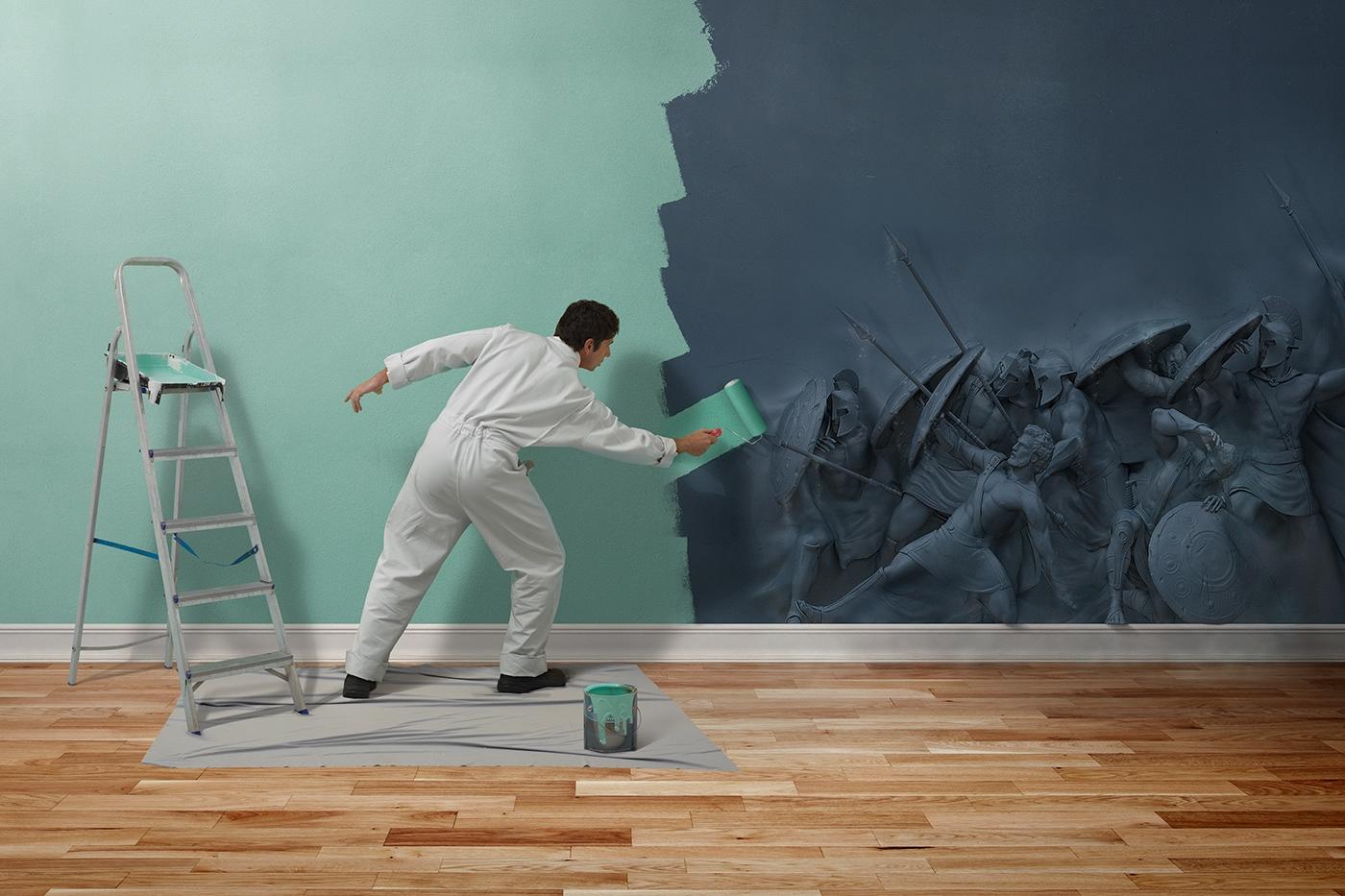
You’ve decided it’s time to refresh your Leawood Hills home. The walls are looking a little tired, and you might have noticed a few hairline cracks or subtle water stains on the ceiling. As you start planning, a common question arises: Is painting the ceiling the same as painting the walls? For many homeowners, the assumption is that paint is paint, and the process is universal. However, this misconception can lead to disappointing results, unnecessary mess, and even potential damage to your home’s surfaces. Understanding the distinct challenges and techniques required for each surface is the key to achieving that flawless, professional finish that enhances the beauty and value of your home. This is particularly true for the specific needs of homes in our community, where attention to detail is paramount.
The Overhead Challenge: Why Ceiling Painting Is a Different Beast
Painting a ceiling is arguably the most physically demanding and technically challenging aspect of interior painting. It’s not simply a matter of applying color overhead; it requires a specific approach to tackle its unique problems.
Gravity and Ergonomics: The Unseen Adversaries
The most immediate difference is the fight against gravity. When you roll paint onto a ceiling, it has a natural tendency to drip, spatter, and create what professionals call "holidays"—thin, missed spots. Maintaining a consistent pressure on a roller while your neck is craned back and your arms are overhead is exhausting. This fatigue leads to uneven application and a subpar finish. Furthermore, proper lighting is crucial. Shadows can easily hide missed spots on a textured or "popcorn" ceiling, which are common in many Leawood Hills homes, making a second coat or touch-ups necessary.
Dealing with Textures and Stains
Ceilings often harbor secrets that walls do not.
-
Textured Surfaces: Popcorn or knockdown textures are notorious for absorbing paint unevenly and can be easily damaged by a overly aggressive roller. They require a specific nap length on a roller cover to ensure the paint gets into all the nooks and crannies without tearing the texture.
-
Water Stains: A common issue, especially in older homes, is the yellow or brown water stain from a past roof leak or plumbing incident. Unlike a scuff on a wall, these stains will bleed through almost any standard paint. They require a dedicated stain-blocking primer, like a shellac-based product, to seal them in permanently. Applying paint directly over them is a guarantee the stain will reappear within days or weeks.
The Critical Role of Primer and Paint Sheen
The choice of primer and paint for a ceiling is strategic. A flat or matte sheen is almost always recommended. Why? Because a flat finish is non-reflective, which perfectly hides minor surface imperfections and minimizes the appearance of any subtle unevenness. It also reduces glare from overhead lighting. Using a primer designed for ceiling coverage ensures better adhesion and a more uniform base for your topcoat, which often means you can achieve full coverage with just one coat of paint.
The Vertical Canvas: Mastering Wall Painting for Flow and Function
While still requiring skill, wall painting offers more flexibility and focuses on creating the aesthetic tone for a room. The challenges here are less about physics and more about precision and color dynamics.
The Art of Cutting-In and Seamless Blending
The hallmark of a professional paint job on walls is crisp, clean lines where the wall meets the ceiling, trim, and adjacent walls. This process, known as "cutting-in," is a skilled task typically done with a high-quality angled brush. It requires a steady hand and patience. The goal is to create a sharp boundary without relying on tape, which can sometimes leak or pull off fresh paint. Once the edges are cut in, the large wall areas are filled with a roller. The key is to maintain a "wet edge" to avoid lap marks—those frustrating stripes where rolled sections have overlapped after the paint has started to dry.
Color Selection and Its Impact on a Space
This is where your personal style comes to life. Wall color dramatically influences the perception of a room. Lighter colors can make a space feel larger and airier, while darker, richer tones can create a sense of intimacy and sophistication. However, darker colors require a greater commitment. They often need multiple coats (sometimes over a tinted primer) to achieve full, rich depth, and they can be more challenging to cover up later. The sheen you choose also matters more on walls than on ceilings. Eggshell and satin are popular for living areas and bedrooms as they offer a slight glow and are more washable than flat paint. Semi-gloss is typically reserved for trim, doors, and high-moisture areas like bathrooms and kitchens due to its high durability and easy cleanability.
Protecting Your Space and Managing Transitions
Wall painting involves significant surface area and requires diligent protection of everything you don’t want painted. This includes:
-
Flooring: Using drop cloths that are canvas (which don't slip and absorb spills) is preferable to plastic, which can be treacherous to walk on.
-
Trim and Fixtures: Careful application with a brush and the use of painter's tape on already-painted trim protect your woodwork and outlets.
A professional will also manage the transition between walls and ceilings seamlessly, ensuring the lines are straight and the colors don’t bleed into one another.
The Foundational Step: Why Professional Cleaning and Painting Go Hand-in-Hand
A common thread that ties both ceiling and wall painting together—and a step that is too often skipped by DIYers—is thorough surface preparation. You cannot achieve a beautiful, long-lasting paint job on a dirty surface. This is where the value of a service that encompasses cleaning and painting Leawood Hills KS homeowners can trust becomes evident.
Dust, cobwebs, and grime—especially the oily residue that accumulates in kitchens—will prevent paint from properly adhering. A professional process always includes:
-
Dusting and Vacuuming: Removing all loose debris from ceilings, walls, and corners.
-
Washing: Using appropriate cleaning solutions to degrease and de-grime surfaces. This is critical for walls in high-traffic areas and ceilings near cooking areas.
-
Repairing: Filling nail holes and cracks with spackle and sanding them smooth.
-
Priming: Applying the correct primer for the specific surface and stain.
Skipping the cleaning and painting Leawood Hills KS best practices is like putting a fresh coat of wax on a dirty car. The result will be flawed and won't last.
Making the Right Choice for Your Home
So, should you tackle this yourself? For a small, simple room with smooth walls and a flat ceiling, a DIY project can be rewarding. But for the larger, more complex spaces common in Leawood Hills homes—especially those with high ceilings, intricate trim, or textured surfaces—the expertise of a professional is a wise investment.
A professional painter brings the right equipment, knowledge of material science, and the skill to execute both ceiling and wall painting flawlessly. They ensure that water stains are sealed, textures are preserved, lines are razor-sharp, and the finished product is durable and beautiful. They handle the arduous prep work and the messy clean-up, saving you time, stress, and the potential cost of fixing mistakes.
In the end, understanding the distinct disciplines of ceiling painting Leawood Hills KS properties require and wall painting empowers you as a homeowner. It allows you to either plan your project with a greater chance of success or to have an informed conversation with a painting professional. By respecting the unique demands of each surface and never underestimating the power of proper preparation, you can ensure your next painting project transforms your home into the elegant and inviting space you envision.

 Arabic
 French
 Spanish
 Portuguese
 Deutsch
 Turkish
 Dutch
Dutch
 Italiano
 Russian
 Romaian
 Portuguese (Brazil)
 Greek
Greek